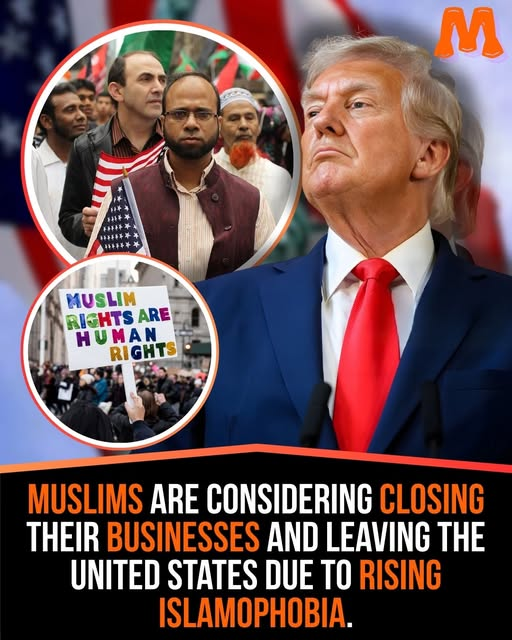
In recent years, a troubling wave of Islamophobia has been sweeping across the United States, a reality many Muslim business owners know all too well. With the introduction of new policies under President Donald Trump, along with the inflammatory rhetoric that has dominated public discourse, many Muslim business owners have found themselves facing unprecedented levels of harassment, fear, and uncertainty. As the nation grapples with issues surrounding immigration and national security, Muslim communities are bearing the brunt of an increasingly polarized environment. Many business owners are now considering closing their doors or leaving the country altogether, caught between their commitment to their livelihood and their growing fears for the safety of their families.
This article aims to explore the challenges faced by Muslim business owners in the U.S. amid rising Islamophobia, the impact of political policies, and the broader consequences for immigrant communities. It will also delve into the emotional and economic toll on those affected and the ways in which the country can address these concerns to foster unity and healingPart 1: The Impact of Rising Islamophobia on Muslim Business Owners
Understanding Islamophobia and Its Effect
Islamophobia refers to the irrational fear, hatred, and prejudice against Muslims and Islam. Over the years, this fear has been exacerbated by certain media portrayals and political rhetoric that falsely associate Muslims with extremism and terrorism. For many Muslim business owners, this growing wave of Islamophobia has manifested in real, tangible threats to their livelihoods and personal safety.
Harassment and discrimination are nothing new for Muslim business owners, but in recent years, these actions have become more overt and violent. From verbal abuse to physical threats and vandalism, many Muslim-owned businesses—such as gas stations, convenience stores, and car washes—have become targets. The intense hostility faced by these owners can be traced to both the policies put in place by the Trump administration and the divisive rhetoric that has filtered down into local communities.For many business owners, the fear of hostility is now a constant presence. They face daily challenges just to run their businesses without encountering abuse from customers or even the wider community. As tensions have escalated, Muslim business owners have reported feeling unsafe, with some even installing extra security measures, such as cameras and reinforced doors, to protect their establishments from potential attacks.
The rise in hate crimes, including the defacement of Muslim-owned properties and verbal attacks against employees, has contributed to a deep sense of fear among business owners. Some have even been forced to cut back on their hours or temporarily shut down their businesses for fear of escalating threats. Others, feeling vulnerable and isolated, have even considered moving their families out of the country in search of a safer, more welcoming environment.One of the key drivers of the current climate of fear is the series of safety measures introduced by President Trump’s administration, particularly those aimed at immigration. Though these policies are officially justified on the grounds of national security, many Muslim business owners feel targeted and singled out due to their religious background.

Leave a Reply