House passed a bill to extend enhanced Affordable Care Act subsidies for three more years by a vote of 230–196. Seventeen Republicans crossed party lines to support Democrats, signaling growing resistance to Donald Trump’s influence. The motion to reconsider was immediately tabled without objection, making the vote final.
At the same time, the Senate unanimously agreed to move forward with a plaque honoring law enforcement officers who defended the Capitol on January 6th, despite opposition from MAGA-aligned House Republicans. Senator Tom Tillis, who is not seeking reelection, played a key bipartisan role.
The Senate also passed a war powers resolution limiting Trump’s ability to take military action in Venezuela, with several Republicans joining Democrats.
Across Congress, Republican lawmakers are increasingly speaking out—on NATO, Greenland, and democratic norms—showing visible cracks in Trump’s control as the midterms approach.
Minnesota is now in open confrontation with President Trump’s ICE surge. After the fatal shooting of 37-year-old U.S. citizen Renee Nicole Good by an ICE agent, and another reported federal shooting in North Minneapolis, tensions have exploded on the streets. Tonight, Minneapolis officials confirmed reports of gunfire involving federal law enforcement as protesters clashed with ICE agents using flashbangs and pepper balls.
This all stems from Trump’s “Operation Metro Surge,” which sent roughly 2,000 immigration agents into Minnesota, the largest operation in state history. State leaders say it has led to wrongful detentions of U.S. citizens, unconstitutional raids, and escalating violence. Minnesota’s Attorney General, along with Minneapolis and St. Paul, has sued the Trump administration, calling the operation an unlawful federal occupation and political retaliation.
A federal judge has already ordered one ICE detainee released, ruling agents violated the Fourth Amendment by breaking into a home without a judicial warrant. While local police aren’t arresting ICE agents, Minnesota’s message is unmistakable: end the surge, respect the Constitution, and get out of our state.
A former president ignoring court orders used to be unthinkable. Not anymore. Judges are now making it clear that Donald Trump is not above the law—and contempt findings prove it.
In the New York hush money case, Judge Juan Merchan found Trump in criminal contempt ten times for repeatedly violating a gag order. These weren’t accidents. Trump knowingly attacked jurors, witnesses, and family members of court officials, despite clear warnings.
Each violation brought the maximum $1,000 fine, but the judge openly admitted fines weren’t working. That’s when the warning escalated. Judge Merchan stated on the record that jail time—up to 30 days—was on the table if violations continued.
His message was unmistakable: “I don’t want to jail a former president—but I will if necessary.”
This matters beyond one case. It shows courts are willing to enforce their authority, even against a former president. The rule of law only works if court orders are real—and now, defiance comes with real consequences.A former president ignoring court orders used to be unthinkable. Not anymore. Judges are now making it clear that Donald Trump is not above the law—and contempt findings prove it.
In the New York hush money case, Judge Juan Merchan found Trump in criminal contempt ten times for repeatedly violating a gag order. These weren’t accidents. Trump knowingly attacked jurors, witnesses, and family members of court officials, despite clear warnings.
Each violation brought the maximum $1,000 fine, but the judge openly admitted fines weren’t working. That’s when the warning escalated. Judge Merchan stated on the record that jail time—up to 30 days—was on the table if violations continued.
His message was unmistakable: “I don’t want to jail a former president—but I will if necessary.”
This matters beyond one case. It shows courts are willing to enforce their authority, even against a former president. The rule of law only works if court orders are real—and now, defiance comes with real consequences.
What if I told you that one brief pause exposed one of the deepest cracks inside today’s Republican Party?
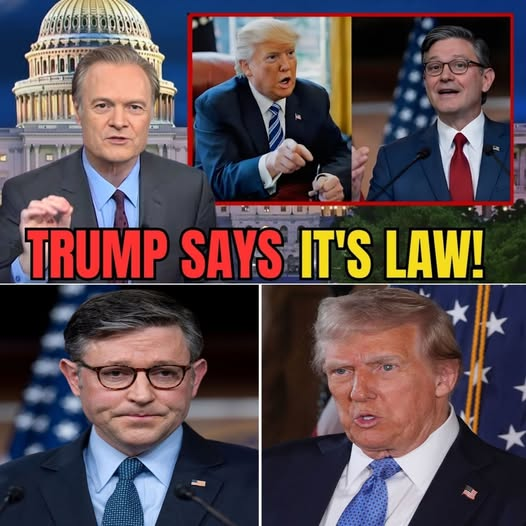
Donald Trump stood before cameras and confidently announced a 10% cap on credit card interest rates — a policy that does not legally exist and cannot be imposed by presidential decree. Normally, moments like this trigger instant loyalty. But this time, something different happened.
Speaker of the House Mike Johnson didn’t defend it.
He hesitated.
He hedged.
He warned about “process” and “unintended consequences.”
In Washington, that language means one thing: this isn’t real.
That pause mattered because Johnson’s job has always been to shield Trump, not question him. Yet faced with an idea that rattles donors, markets, and banks, even he couldn’t pretend. The concern wasn’t democracy or norms — it was economic fallout.
This wasn’t rebellion. It was containment.
And it revealed a dangerous truth for Trumpism: confidence no longer equals competence when voters are drowning in debt. When reality meets performance, hesitation becomes visible — and once that illusion cracks, it doesn’t heal.
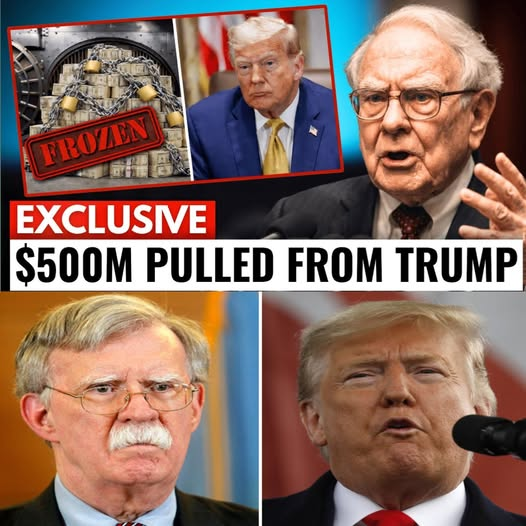
5 MIN AGO: Republican Donors Pull $500M From Trump as His Empire Crumbles | Buffett RespondsIn the past 48 hours, Republican mega donors have pulled nearly $500 million from Donald Trump’s political operation—an unprecedented financial rupture for a presidential front-runner. Major names like Ken Griffin, the Koch Network, and Paul Singer have either withdrawn, redirected, or frozen their support, citing legal risk, poor return on investment, and reputational damage.
Campaign finance experts say Trump-aligned super PAC funding has dropped over 70% in less than two months, triggering canceled ad buys, staff departures, and growing operational strain. Much of the money is now flowing to alternative Republican candidates or being held back entirely.
Investor Warren Buffett framed the moment bluntly: when fundamentals fail—rising liabilities, declining confidence, and unstable leadership—capital flees. In politics, that means campaigns collapse.
This isn’t ideology. It’s risk management. The donor class has moved on—and history shows campaigns rarely survive a financial
The late-night talk show host and prominent Trump critic wasted no time in roasting the president for the pathetic display that played out in the Oval Office today as Venezuelan opposition leader María Corina Machado tried to worm her way back into Trump’s good graces by giving him her Nobel Peace Prize.
“Trump loves awards,” Kimmel said. “Giving him an award seems like the only way to get him to do anything. And with that said, Mr. President, I have an offer I think you’ll find difficult to refuse. If you, and only if, you agree to pull ICE out of Minneapolis and put them back at the borders where they belong, I am prepared to offer you one of the following trophies that I have been honored with over the years.
“The Daytime Emmy I won for Best Game Show Host in 1999, that could be yours. Or perhaps you would prefer my Clio Award for my work selling crap to people, or my Webby Award, the most prestigious award the internet can give, or my Writers Guild Award. This is a good one.”
“You see, it looks nice. Or best of all, I’m willing to hand over my 2015 Soul Train Award for White Person of the Year. You do this.”
“The choice is yours. I will personally deliver any or even all of these to the Oval Office in exchange for leaving the people of Minneapolis alone.”
A tempting offer indeed, Mr. President.
Please accept and leave the good people of Minnesota alone while you massage your bloated, malignant ego with unearned and undeserved accolades.
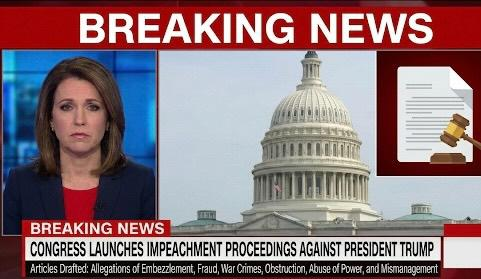
BREAKING: The U.S. Congress Officially Launches Impeachment Proceedings Against President Donald Trump, Drafting Detailed Articles Alleging Embezzlement, Fraud, War Crimes, Obstruction of Justice, Abuse of Power, and Mismanagement of Taxpayer Funds by Him and Members of His CabinetIn a shocking twist in an alternate version of America, the U.S. Capitol erupted into chaos this week after lawmakers launched sweeping impeachment proceedings against President Donald Trump, triggering what many are calling the most explosive constitutional crisis in modern history.
Inside a packed House chamber, congressional leaders unveiled a thick stack of documents labeled “Articles of Impeachment”, accusing the president and members of his cabinet of a stunning range of alleged misconduct — from financial crimes to abuses of military power. The charges, read aloud as cameras rolled, sent shockwaves through Washington and across the world.
Crowds gathered outside the Capitol, chanting, waving flags, and livestreaming every moment as the fate of the presidency suddenly hung in the balance.
The Allegations That Shook the Nation
According to the fictional articles, investigators claim Trump used his office to secretly move public funds through shell companies tied to political allies and family members. These funds, lawmakers allege, were used to enrich insiders, finance political influence campaigns, and shield loyalists from legal exposure.
Another explosive section of the document accuses the administration of manipulating military operations abroad — allegedly authorizing covert actions without congressional approval, resulting in civilian deaths that critics labeled “war crimes hidden behind executive power.”
Lawmakers also accused Trump of obstructing justice by pressuring federal agencies to bury investigations, intimidate witnesses, and withhold classified records from oversight committees.
One committee chair declared dramatically:
“This is not about politics. This is about whether a president can place himself above the Constitution.”
A Government in Open Revolt
As the allegations spread, cabinet members were reportedly scrambling behind closed doors. Some were said to be preparing resignation letters, while others were frantically denying involvement.
Leaks began flooding social media — documents, emails, and internal memos allegedly showing a web of financial and political manipulation stretching across the highest levels of government.
Markets trembled. International allies demanded explanations. Cable news networks canceled all regular programming.
In this alternate reality, America wasn’t just watching a scandal — it was watching the foundations of power crack in real time.
Trump Fights Back
From the White House, President Trump responded with fury, calling the impeachment a “deep-state coup” and accusing Congress of trying to overturn the will of the voters.
“This is the greatest witch hunt in history,” he declared, vowing to fight the charges with everything he had.
Supporters flooded the streets, waving banners and chanting his name. Protesters filled other cities demanding his removal. The country split down the middle, with families, friendships, and entire communities torn apart by the unfolding drama.
A Nation Holding Its Breath
As Congress prepared for hearings that could lead to a historic trial in the Senate, the future of the presidency — and the nation — hung by a thread.
Would the evidence bring down one of the most controversial leaders in American history?
Or would Trump survive yet another political storm?
In this fictional America, one thing was clear:
The war for power had moved from campaign rallies to the very heart of the Constitution — and nothing would ever be the same again.
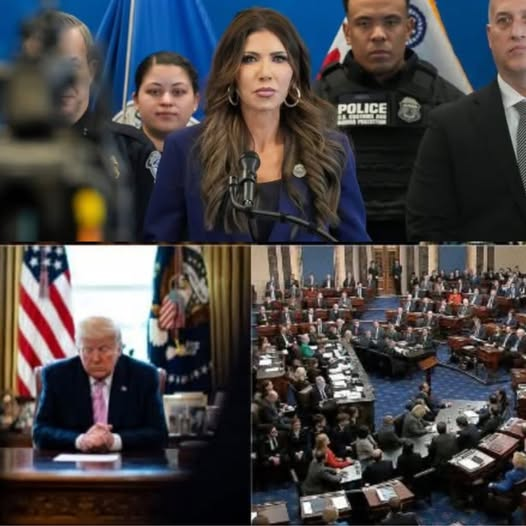
JIST IN: Kristi Noem is officially facing articles of impeachment, and yes, there is a chance she actually gets impeached.But if she doesn’t get impeached, we’ll ensure she’s out of office after we reclaim Congress for the Democrats.
**JUST IN:** Kristi Noem is now facing articles of impeachment, marking a serious escalation in scrutiny of her conduct. While impeachment is never guaranteed, the process itself signals that concerns have reached a level lawmakers can no longer ignore. Whether this effort advances will depend largely on sustained public attention and political pressure in the days ahead.
History shows that impeachment efforts often stall when the spotlight fades. That’s why advocates argue that staying vocal matters—public engagement, media coverage, and civic pressure can influence whether accountability measures move forward or quietly disappear. This moment, they say, is less about partisanship and more about insisting that elected officials answer to the public.
If impeachment does not ultimately succeed, the political consequences may still be significant. Organizers are already framing the situation as a turning point, vowing to hold Noem accountable at the ballot box by reclaiming Congress for Democrats. One way or another, they argue, this controversy will follow her—and voters will have the final say.
In an unprecedented move, a judge has rejected D.o.n.a.l.d T.r.u.m.p’s emergency request to halt the seizure of his properties, calling his arguments “frivolous, legally baseless, and an insult to the court.” This decision comes from New York Attorney General Letitia James’ civil fraud case, in which T.r.u.m.p was found liable for inflating property values to secure loans while undervaluing them for taxes.
The court ordered T.r.u.m.p to pay over $450 million. Under New York law, he needed to post a bond to pause enforcement during his appeal—but he couldn’t, as financial institutions refused to accept his assets as collateral, citing the court’s ruling that those valuations were fraudulent.
Authorities have now begun inventorying and preparing high-profile properties—including 40 Wall Street, Seven Springs, and even T.r.u.m.p Tower—for potential seizure. The judge emphasized this isn’t political persecution—this is accountability. T.r.u.m.p had his trial, lost, and failed to pay.
This isn’t just a threat to his business empire; it undermines the narrative of T.r.u.m.p as a billionaire mastermind.
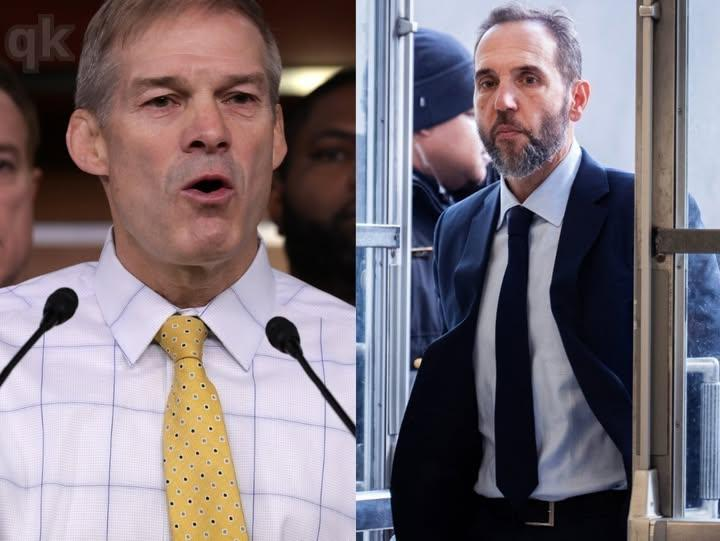
JUST IN:30 minutes ago, tension surged on Capitol Hill after special counsel Jack Smith formally demanded that Rep. Jim Jordan release the full video of his eight-hour, closed-door testimony before the House Judiciary Committee.
Tension escalated on Capitol Hill earlier today after reports emerged that Special Counsel Jack Smith has formally requested Rep. Jim Jordan to release the full video recording of his eight-hour, closed-door testimony before the House Judiciary Committee. The request, made public roughly 30 minutes ago, has sparked immediate political and legal debate, given the sensitive nature of the testimony and its potential relevance to ongoing federal investigationsSources familiar with the matter say the special counsel is seeking the unedited footage to clarify discrepancies between witness accounts and previously released excerpts or summaries of the session. Rep. Jordan, a senior Republican and a prominent figure in congressional oversight matters, testified behind closed doors as part of an internal committee inquiry, with the recording remaining under House control.
The demand has already drawn sharp reactions from lawmakers on both sides of the aisle. Supporters of the request argue that transparency is essential where testimony may intersect with federal investigative interests, while critics warn that releasing the video could undermine congressional privilege and set a precedent for executive intrusion into legislative proceedings. As of now, Rep. Jordan’s office has not issued a formal response, and it remains unclear whether the House Judiciary Committee will comply with the reques



 In the past 48 hours, Republican mega donors have pulled nearly $500 m