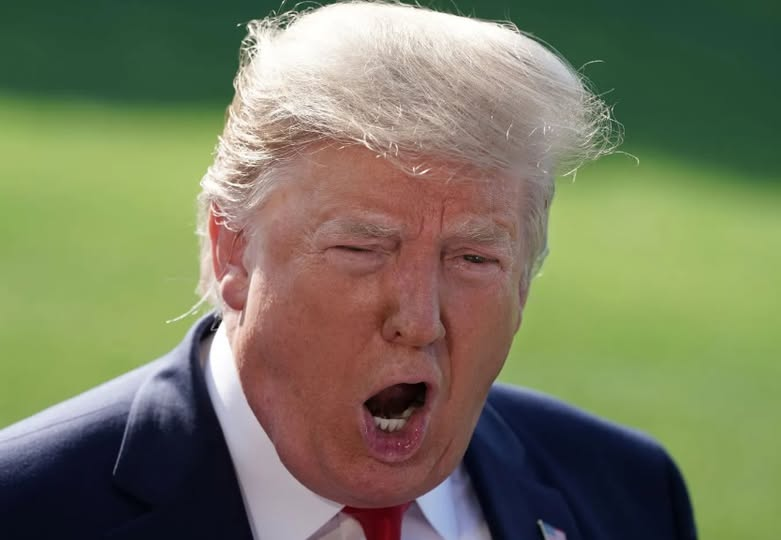
CNN’s Kristen Holmes is reporting that Trump’s breakfast with most of America’s governors went completely off the rails when the news that the Supreme Court had struck down Trump’s tariffs hit, leading to a furious tantrum from the President.
“We still have no official reaction from the White House or President Trump. We are waiting. I am told that they are meeting and discussing how they are going to respond,” said Holmes.
“But we have learned more about what happened in the room when President Trump was with those governors and he learned of the Supreme Court decision. Apparently, breakfast had been going well. They were working together. And then President Trump became enraged. He started ranting about the decision, not only calling it a disgrace, but started attacking the courts, at one point saying, ‘these effing courts.’”
Holmes then twisted the knife just a little more: “This could not be a bigger loss for President Trump. Not only is so much of his economic agenda based on these tariffs, so much of his foreign policy is based on these tariffs. He has touted them as the most important part of the economic agenda. So clearly a huge loss and he recognizes that today.”
Couldn’t have happened to a more deserving would-be dictator! It is so fitting that the central pillar of Trump’s entire agenda was knocked down by some of the extremist judges that he himself nominated to the Supreme Court…and deeply disturbing that three of them them were willing to throw the Constitution in the trash to enable Trump’s tyranny.
But make no mistake: Trump’s growing authoritarianism will bring him in direct conflict with the courts one way or another, and that will put our entire democracy as we know it at risk.
We must be ready to take to the streets, shut the country down, and take a stand against dictatorship or lose our freedoms forever.
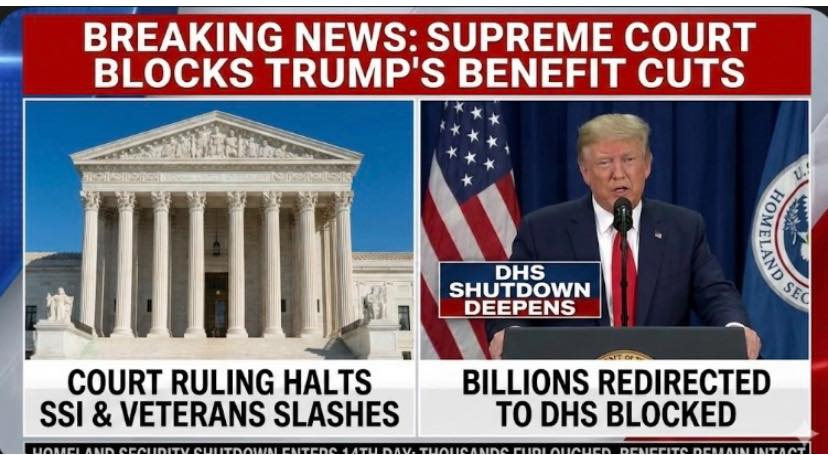
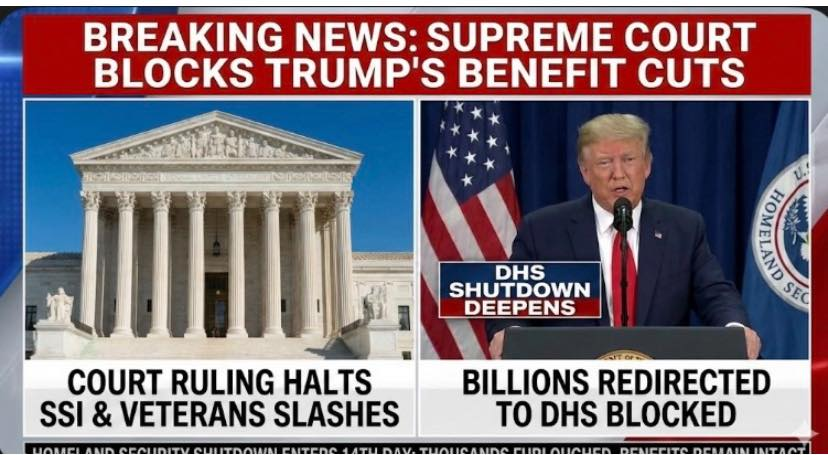
Supreme Court Blocks Trump Plan to Redirect SSI and Veterans Benefits to DHS Amid Funding Standoff
In a major constitutional showdown, the supreme court’l of the United States has blocked a controversial proposal backed by former President that sought to reduce funding for Supplemental Security Income (SSI) and veterans benefits in order to reallocate billions of dollars to the Department of Homeland Security (DHS).
The ruling comes as DHS faces a partial shutdown triggered by a deepening funding impasse in Congress. Lawmakers have been locked in negotiations over border security allocations, immigration enforcement priorities, and broader federal spending levels. With no agreement in place, portions of Homeland Security operations have slowed, intensifying pressure on both the White House and Capitol Hill. The Proposal at the Center of the Fight
According to court filings, the Trump-backed plan would have temporarily reduced certain SSI and veterans benefits allocations, arguing that emergency executive authority allowed for limited reprogramming of federal funds during a national security crisis. Supporters of the proposal claimed the move was necessary to maintain border operations, immigration enforcement, and national security readiness amid the congressional deadlock.
Critics, however, argued that the executive branch does not have unilateral authority to redirect congressionally appropriated funds—especially from entitlement programs such as SSI and veterans benefits, which are considered legally protected mandatory spending.
Several advocacy groups representing seniors, disabled Americans, and military veterans quickly filed suit, contending that the proposal violated the Constitution’s Appropriations Clause, which grants Congress—not the president—the power of the purse.
The Court’s Decision
In its emergency order, the Supreme Court temporarily halted implementation of the plan, effectively preserving SSI and veterans benefits funding while the legal challenge proceeds. Though the Court did not issue a full opinion explaining its reasoning, the order signals serious constitutional concerns about executive authority to alter congressionally designated funding streams.
Legal analysts say the decision underscores a fundamental separation-of-powers principle: presidents cannot rewrite spending laws passed by Congress, even during politically charged funding crises.
“This is a clear reminder that federal entitlement programs cannot be used as bargaining chips in budget standoffs,” one constitutional law scholar noted following the ruling.
Political Fallout
The decision represents a significant setback for Trump and his allies, who have framed the DHS shutdown as a direct consequence of congressional inaction. Supporters argue that extraordinary measures were justified to prevent disruptions to border security and homeland operations.
Opponents counter that shifting funds from vulnerable populations—particularly low-income seniors, disabled Americans, and military veterans—would have set a dangerous precedent.
On Capitol Hill, reactions split largely along party lines. Some lawmakers called the ruling a victory for constitutional checks and balances, while others criticized the Court for what they described as interference in urgent national security matters.
What Happens Next
For now, SSI recipients and veterans will continue receiving full benefits as previously authorized by Congress. The broader funding dispute over DHS remains unresolved, however, and negotiations are expected to intensify in the coming days.
The legal battle could return to the Supreme Court for a full hearing, potentially resulting in a landmark ruling that clarifies the limits of presidential authority in federal budget emergencies.
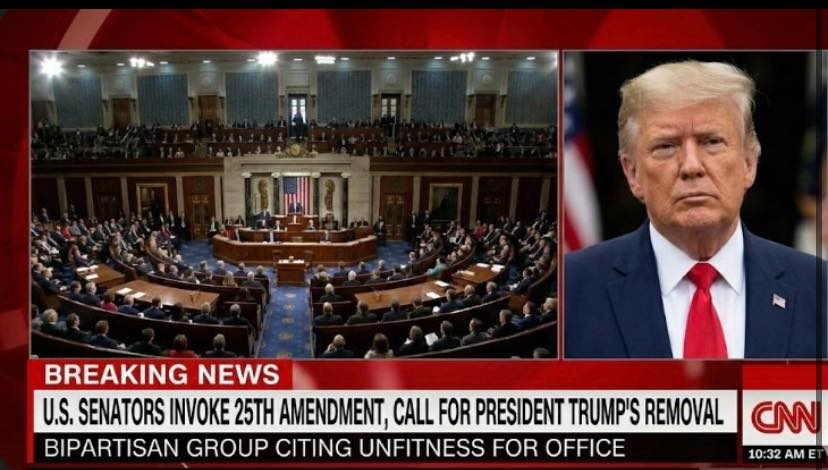
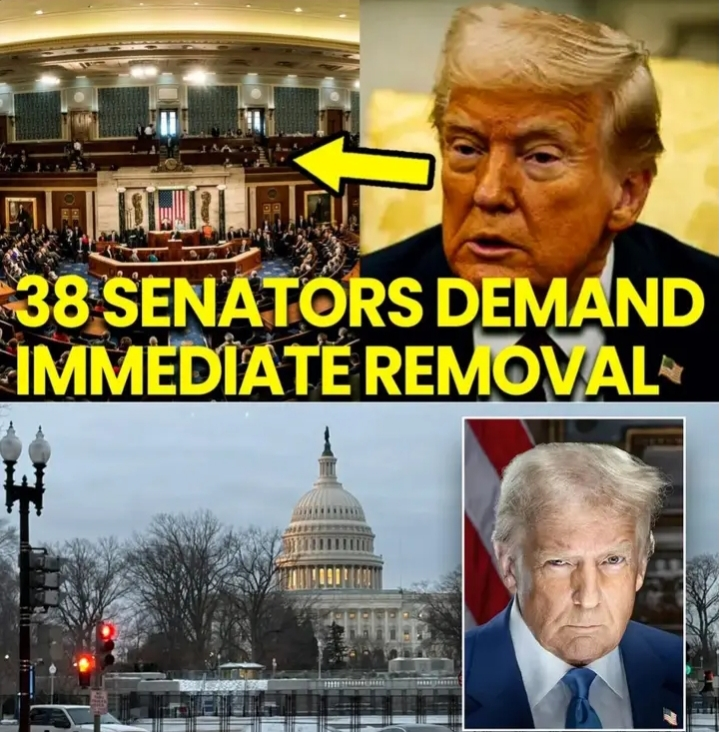
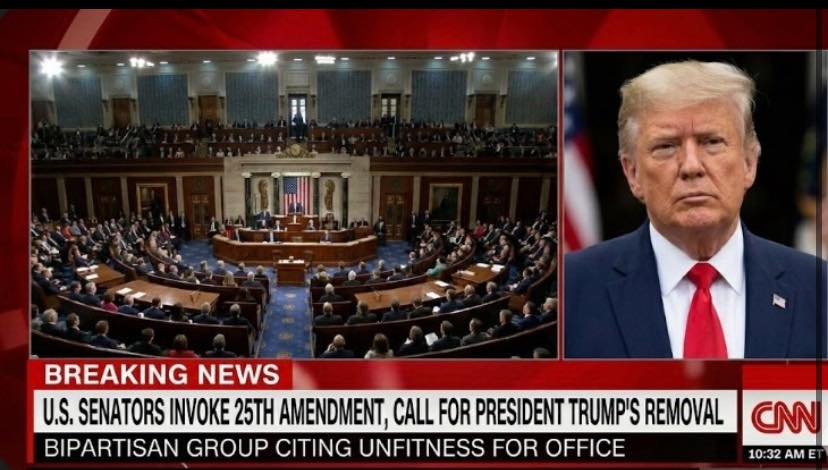
WASHINGTON, D.C. — A group of U.S. Senators has formally called for the removal of President Donald Trump under the 25th Amendment, igniting a fierce constitutional and political battle in the nation’s capital.
In a joint statement released Tuesday, the lawmakers argued that the extraordinary step is necessary to address what they described as concerns over the president’s ability to effectively discharge the powers and duties of his office. The move immediately sent shockwaves through Capitol Hill, triggering intense debate among members of Congress, constitutional scholars, and political leaders across the country.
The 25th Amendment to the U.S. Constitution provides a mechanism for removing a sitting president who is deemed unable to fulfill the responsibilities of the office. Under Section 4 of the amendment, the vice president and a majority of the Cabinet must declare the president unfit to serve. Congress would then play a decisive role if the president contests the declaration, requiring a two-thirds vote in both chambers to uphold the removal.
While senators can publicly call for the amendment to be invoked, the formal process ultimately hinges on action from the vice president and Cabinet officials. As of now, there has been no public indication that such steps have been taken by the executive branch. Supporters of the senators’ action argue that the Constitution provides this safeguard precisely for moments of national concern, emphasizing that the 25th Amendment is a lawful and structured process — not a political shortcut. “This is about protecting the stability of the country,” one senator said during remarks on the Senate floor.
Opponents, however, have sharply criticized the move, calling it politically motivated and unprecedented. Allies of President Trump dismissed the call as partisan theater, asserting that disagreements over policy or leadership style do not meet the constitutional threshold for removal under the 25th Amendment.
The development comes amid heightened political tensions in Washington, where divisions between parties have deepened over major policy issues and executive actions. Legal experts note that invoking Section 4 of the 25th Amendment is extraordinarily rare and has never successfully resulted in the permanent removal of a president against their will.
If pursued, the process could trigger one of the most significant constitutional confrontations in modern American history. For now, the White House has not issued a detailed response beyond reaffirming that the president continues to carry out his duties.
As the debate unfolds, the nation watches closely, with the potential implications reaching far beyond Capitol Hill and into the broader landscape of American democracy.
WASHINGTON, D.C. — A group of U.S. Senators has formally called for the removal of President Donald Trump under the 25th Amendment, igniting a fierce constitutional and political battle in the nation’s capital.
In a joint statement released Tuesday, the lawmakers argued that the extraordinary step is necessary to address what they described as concerns over the president’s ability to effectively discharge the powers and duties of his office. The move immediately sent shockwaves through Capitol Hill, triggering intense debate among members of Congress, constitutional scholars, and political leaders across the country.
The 25th Amendment to the U.S. Constitution provides a mechanism for removing a sitting president who is deemed unable to fulfill the responsibilities of the office. Under Section 4 of the amendment, the vice president and a majority of the Cabinet must declare the president unfit to serve. Congress would then play a decisive role if the president contests the declaration, requiring a two-thirds vote in both chambers to uphold the removal.
While senators can publicly call for the amendment to be invoked, the formal process ultimately hinges on action from the vice president and Cabinet officials. As of now, there has been no public indication that such steps have been taken by the executive branch. Supporters of the senators’ action argue that the Constitution provides this safeguard precisely for moments of national concern, emphasizing that the 25th Amendment is a lawful and structured process — not a political shortcut. “This is about protecting the stability of the country,” one senator said during remarks on the Senate floor.
Opponents, however, have sharply criticized the move, calling it politically motivated and unprecedented. Allies of President Trump dismissed the call as partisan theater, asserting that disagreements over policy or leadership style do not meet the constitutional threshold for removal under the 25th Amendment.
The development comes amid heightened political tensions in Washington, where divisions between parties have deepened over major policy issues and executive actions. Legal experts note that invoking Section 4 of the 25th Amendment is extraordinarily rare and has never successfully resulted in the permanent removal of a president against their will.
If pursued, the process could trigger one of the most significant constitutional confrontations in modern American history. For now, the White House has not issued a detailed response beyond reaffirming that the president continues to carry out his duties.
Party lines fracture as calls for impeachment and Section 4 surge across Congress. Nearly one million citizens sign petitions, pressure mounts, and 2026 suddenly feels closer than ever…
If this escalates, the balance of power in America could change overnight.Tensions on Capitol Hill are rising as divisions within both major parties deepen over renewed calls for impeachment and the possible invocation of Section 4 of the Twenty-fifth Amendment to the United States Constitution. What began as partisan criticism has evolved into a broader and more complicated debate, with lawmakers openly questioning leadership decisions and constitutional accountability.
Several members of Congress have publicly floated impeachment inquiries, citing concerns over executive conduct and governance. While party leadership has not formally endorsed proceedings, the conversation has moved from political fringes into mainstream committee discussions. The mere suggestion of invoking Section 4 — a rarely discussed constitutional mechanism allowing the vice president and Cabinet to declare a president unable to discharge the powers of the office — has added an extraordinary dimension to the unfolding drama.
Outside Washington, civic engagement is surging. Advocacy groups report that nearly one million citizens have signed petitions urging congressional action, reflecting heightened public anxiety over the country’s political direction. Though petitions alone carry no legal force, they signal growing grassroots mobilization ahead of the 2026 midterm elections.
Political analysts say the situation underscores a deeper shift in party cohesion. Lawmakers in competitive districts appear especially sensitive to voter pressure, potentially reshaping alliances within Congress. If formal proceedings were to begin — whether through impeachment under the United States Constitution or action tied to the Twenty-fifth Amendment — the impact on legislative priorities, financial markets, and international diplomacy could be swift.
For now, congressional leaders are urging caution, emphasizing the gravity of constitutional remedies. But with campaign season approaching and internal party fractures widening, 2026 feels closer than ever. Should tensions continue to escalate, the balance of power in Washington could shift in ways few anticipated at the start of this term.
WASHINGTON, D.C. — A group of U.S. Senators has formally called for the removal of President Donald Trump under the 25th Amendment, igniting a fierce constitutional and political battle in the nation’s capital.
In a joint statement released Tuesday, the lawmakers argued that the extraordinary step is necessary to address what they described as concerns over the president’s ability to effectively discharge the powers and duties of his office. The move immediately sent shockwaves through Capitol Hill, triggering intense debate among members of Congress, constitutional scholars, and political leaders across the country.
The 25th Amendment to the U.S. Constitution provides a mechanism for removing a sitting president who is deemed unable to fulfill the responsibilities of the office. Under Section 4 of the amendment, the vice president and a majority of the Cabinet must declare the president unfit to serve. Congress would then play a decisive role if the president contests the declaration, requiring a two-thirds vote in both chambers to uphold the removal.
While senators can publicly call for the amendment to be invoked, the formal process ultimately hinges on action from the vice president and Cabinet officials. As of now, there has been no public indication that such steps have been taken by the executive branch. Supporters of the senators’ action argue that the Constitution provides this safeguard precisely for moments of national concern, emphasizing that the 25th Amendment is a lawful and structured process — not a political shortcut. “This is about protecting the stability of the country,” one senator said during remarks on the Senate floor.
Opponents, however, have sharply criticized the move, calling it politically motivated and unprecedented. Allies of President Trump dismissed the call as partisan theater, asserting that disagreements over policy or leadership style do not meet the constitutional threshold for removal under the 25th Amendment.
The development comes amid heightened political tensions in Washington, where divisions between parties have deepened over major policy issues and executive actions. Legal experts note that invoking Section 4 of the 25th Amendment is extraordinarily rare and has never successfully resulted in the permanent removal of a president against their will.
If pursued, the process could trigger one of the most significant constitutional confrontations in modern American history. For now, the White House has not issued a detailed response beyond reaffirming that the president continues to carry out his duties.
As the debate unfolds, the nation watches closely, with the potential implications reaching far beyond Capitol Hill and into the broader landscape of American democracy.
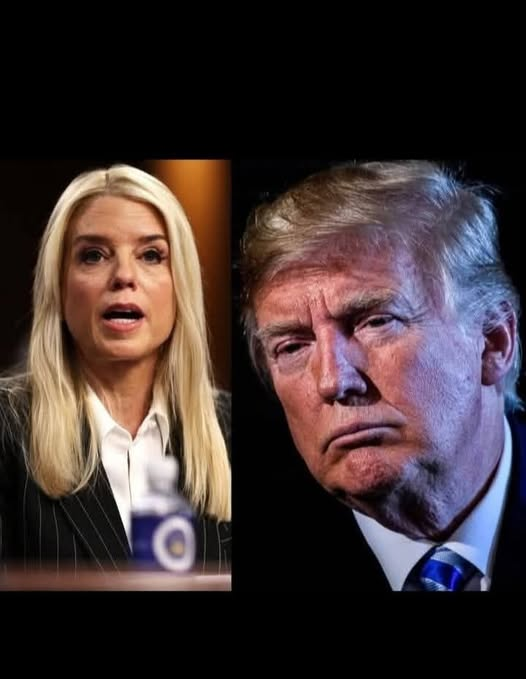
Roughly 70 law professors, attorneys, and former Florida Supreme Court justices Barbara J. Pariente and Peggy A. Quince have banded together to file the ethics complaint in question.
In it, they accuse the nakedly partisan MAGA AG of violating her ethical duties and engaging in “serious professional misconduct that threatens the rule of law and the administration of justice.”
It alleges that she has “sought to compel Department of Justice lawyers to violate their ethical obligations under the guise of ‘zealous advocacy’” that was made clear in a February memo she sent to everyone in the Justice Department on her first day on the job.
They cite specific instances where Bondi and her equally corrupt senior team “ordered Department lawyers to do things those lawyers were ethically forbidden from doing, under threat of suspension or termination—or fired them for not having done so.”
The complaint accuses Bondi of threatening DOJ attorneys with termination unless they chose to “to zealously pursue the President’s political objectives.”
According to the complaint, Bondi has not only violated longstanding norms that ensure the nonpartisan nature of the Justice Department but also run afoul of the Florida Bar’s conduct rules.
The group drew attention to the Florida Bar’s refusal to pursue two prior ethics complaints against Bondi, stating that the “the Florida Bar’s dismissal is unsupported by history or precedent” because its policy of not investigating/prosecuting “sitting officers appointed under the U.S. Constitution while they are in office” does not shield a Florida-licensed lawyer if they’ve been accused of abusing a federal position of power.
When she was testifying at her confirmation hearing, Bondi claimed that the alleged “weaponization” of the Justice Department would end under her leadership. Sticking to the fascist playbook, she accused Democrats of doing what she herself intended on doing.
Under Bondi, the Justice Department has become a partisan attack dog for the far-right MAGA agenda. She isn’t interested in upholding the rule of law or defending our democracy. All she cares about is abusing her power to further ingratiate herself with Trump and advance her own career.
This woman should be removed from her position, disbarred, investigated, and prosecuted.
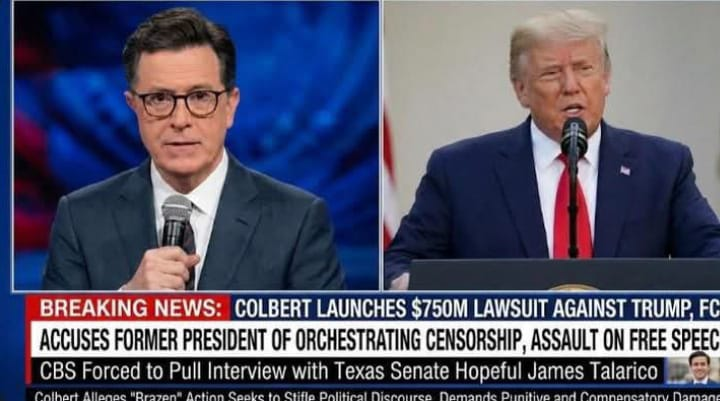
JUST IN: Stephen Colbert Launches $750 Million Federal Lawsuit Against FCC and Donald Trump in Punitive and Compensatory Damages , Accusing Trump of Orchestrating Brazen Censorship and a Direct Assault on Press Freedom and Free Speech by Forcing CBS to Pull Interview with Texas Senate Hopeful James TalaricoIn a dramatic escalation of an already heated media freedom dispute, late-night host **Stephen Colbert** publicly challenged both his own network and federal regulators this week after a planned interview with Texas Democratic Senate candidate **James Talarico** was **blocked from airing on broadcast television**. ([https://www.wcax.com][1])
Colbert — host of *The Late Show With Stephen Colbert* — revealed during Monday’s broadcast that **CBS lawyers told his production team the Talarico interview could not be shown on television**, reportedly out of fear it would trigger enforcement of the Federal Communications Commission’s “equal time” rule. ([Fine Day Radio 102.3 WNJD][2])
The rule, rooted in federal law, requires broadcast networks to provide equivalent airtime to all qualified political candidates if one is featured; historically, news and interview segments were exempt. But under **FCC Chair Brendan Carr**, appointed by former President **Donald Trump**, regulators have signaled a willingness to reinterpret that exemption — potentially subjecting late-night talk shows to stricter scrutiny. ([AP News][3])
Colbert said CBS legal counsel told him the interview **couldn’t be broadcast** and, initially, that he **couldn’t even mention the situation on air**. He defied that instruction, dedicating part of his monologue to explaining the dispute to his audience, and then **released the full Talarico interview on YouTube** — where it quickly amassed millions of views. ([Fine Day Radio 102.3 WNJD][2])
Colbert sharply criticized the FCC’s actions and the broader regulatory climate, characterizing them as politically motivated attempts to chill commentary and debate on broadcast television. While **no credible reporting currently confirms that Colbert has filed a $750 million federal lawsuit against the FCC or Mr. Trump**, the host’s public statements frame the network decision and regulatory pressure as an assault on press freedom.
CBS, for its part, **denied banning the interview outright**, asserting it provided legal guidance about potential equal-time obligations and offered options for compliance, and that *The Late Show* chose to post the interview online instead.
The dispute shines a spotlight on ongoing tensions between **political regulation, broadcast media, and free speech protections**, especially as talk shows and traditional news formats navigate evolving FCC standards and a politically polarized media landscape.
Supreme Court Blocks Trump Plan to Redirect SSI and Veterans Benefits to DHS Amid Funding Standoff
In a major constitutional showdown, the supreme court’l of the United States has blocked a controversial proposal backed by former President that sought to reduce funding for Supplemental Security Income (SSI) and veterans benefits in order to reallocate billions of dollars to the Department of Homeland Security (DHS).
The ruling comes as DHS faces a partial shutdown triggered by a deepening funding impasse in Congress. Lawmakers have been locked in negotiations over border security allocations, immigration enforcement priorities, and broader federal spending levels. With no agreement in place, portions of Homeland Security operations have slowed, intensifying pressure on both the White House and Capitol Hill. The Proposal at the Center of the Fight
According to court filings, the Trump-backed plan would have temporarily reduced certain SSI and veterans benefits allocations, arguing that emergency executive authority allowed for limited reprogramming of federal funds during a national security crisis. Supporters of the proposal claimed the move was necessary to maintain border operations, immigration enforcement, and national security readiness amid the congressional deadlock.
Critics, however, argued that the executive branch does not have unilateral authority to redirect congressionally appropriated funds—especially from entitlement programs such as SSI and veterans benefits, which are considered legally protected mandatory spending.
Several advocacy groups representing seniors, disabled Americans, and military veterans quickly filed suit, contending that the proposal violated the Constitution’s Appropriations Clause, which grants Congress—not the president—the power of the purse.
The Court’s Decision
In its emergency order, the Supreme Court temporarily halted implementation of the plan, effectively preserving SSI and veterans benefits funding while the legal challenge proceeds. Though the Court did not issue a full opinion explaining its reasoning, the order signals serious constitutional concerns about executive authority to alter congressionally designated funding streams.
Legal analysts say the decision underscores a fundamental separation-of-powers principle: presidents cannot rewrite spending laws passed by Congress, even during politically charged funding crises.
“This is a clear reminder that federal entitlement programs cannot be used as bargaining chips in budget standoffs,” one constitutional law scholar noted following the ruling.
Political Fallout
The decision represents a significant setback for Trump and his allies, who have framed the DHS shutdown as a direct consequence of congressional inaction. Supporters argue that extraordinary measures were justified to prevent disruptions to border security and homeland operations.
Opponents counter that shifting funds from vulnerable populations—particularly low-income seniors, disabled Americans, and military veterans—would have set a dangerous precedent.
On Capitol Hill, reactions split largely along party lines. Some lawmakers called the ruling a victory for constitutional checks and balances, while others criticized the Court for what they described as interference in urgent national security matters.
What Happens Next
For now, SSI recipients and veterans will continue receiving full benefits as previously authorized by Congress. The broader funding dispute over DHS remains unresolved, however, and negotiations are expected to intensify in the coming days.
The legal battle could return to the Supreme Court for a full hearing, potentially resulting in a landmark ruling that clarifies the limits of presidential authority in federal budget emergencies
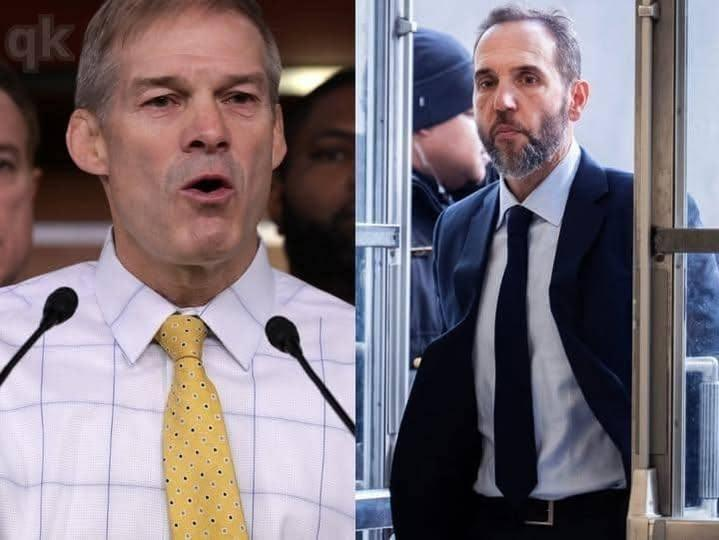
JUST IN:30 minutes ago, tension surged on Capitol Hill after special counsel Jack Smith formally demanded that Rep. Jim Jordan release the full video of his eight-hour, closed-door testimony before the House Judiciary Committee.
Tension escalated on Capitol Hill earlier today after reports emerged that Special Counsel Jack Smith has formally requested Rep. Jim Jordan to release the full video recording of his eight-hour, closed-door testimony before the House Judiciary Committee. The request, made public roughly 30 minutes ago, has sparked immediate political and legal debate, given the sensitive nature of the testimony and its potential relevance to ongoing federal investigations.Sources familiar with the matter say the special counsel is seeking the unedited footage to clarify discrepancies between witness accounts and previously released excerpts or summaries of the session. Rep. Jordan, a senior Republican and a prominent figure in congressional oversight matters, testified behind closed doors as part of an internal committee inquiry, with the recording remaining under House control.
The demand has already drawn sharp reactions from lawmakers on both sides of the aisle. Supporters of the request argue that transparency is essential where testimony may intersect with federal investigative interests, while critics warn that releasing the video could undermine congressional privilege and set a precedent for executive intrusion into legislative proceedings. As of now, Rep. Jordan’s office has not issued a formal response, and it remains unclear whether the House Judiciary Committee will comply with the request.