Category: Uncategorized

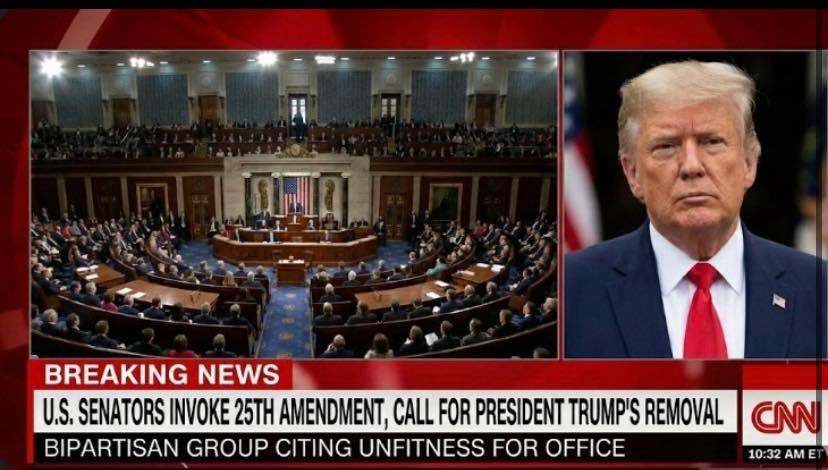
  • JUST IN: U.S. Senators Formally Invoke 25th Amendment, Call for President Donald Trump’s Removal from Office

    WASHINGTON, D.C. — A group of U.S. Senators has formally called for the removal of President Donald Trump under the 25th Amendment, igniting a fierce constitutional and political battle in the nation’s capital.

    In a joint statement released Tuesday, the lawmakers argued that the extraordinary step is necessary to address what they described as concerns over the president’s ability to effectively discharge the powers and duties of his office. The move immediately sent shockwaves through Capitol Hill, triggering intense debate among members of Congress, constitutional scholars, and political leaders across the country.

    The 25th Amendment to the U.S. Constitution provides a mechanism for removing a sitting president who is deemed unable to fulfill the responsibilities of the office. Under Section 4 of the amendment, the vice president and a majority of the Cabinet must declare the president unfit to serve. Congress would then play a decisive role if the president contests the declaration, requiring a two-thirds vote in both chambers to uphold the removal.

    While senators can publicly call for the amendment to be invoked, the formal process ultimately hinges on action from the vice president and Cabinet officials. As of now, there has been no public indication that such steps have been taken by the executive branch.
    Supporters of the senators’ action argue that the Constitution provides this safeguard precisely for moments of national concern, emphasizing that the 25th Amendment is a lawful and structured process — not a political shortcut. “This is about protecting the stability of the country,” one senator said during remarks on the Senate floor.

    Opponents, however, have sharply criticized the move, calling it politically motivated and unprecedented. Allies of President Trump dismissed the call as partisan theater, asserting that disagreements over policy or leadership style do not meet the constitutional threshold for removal under the 25th Amendment.

    The development comes amid heightened political tensions in Washington, where divisions between parties have deepened over major policy issues and executive actions. Legal experts note that invoking Section 4 of the 25th Amendment is extraordinarily rare and has never successfully resulted in the permanent removal of a president against their will.

    If pursued, the process could trigger one of the most significant constitutional confrontations in modern American history. For now, the White House has not issued a detailed response beyond reaffirming that the president continues to carry out his duties.

    As the debate unfolds, the nation watches closely, with the potential implications reaching far beyond Capitol Hill and into the broader landscape of American democracy.
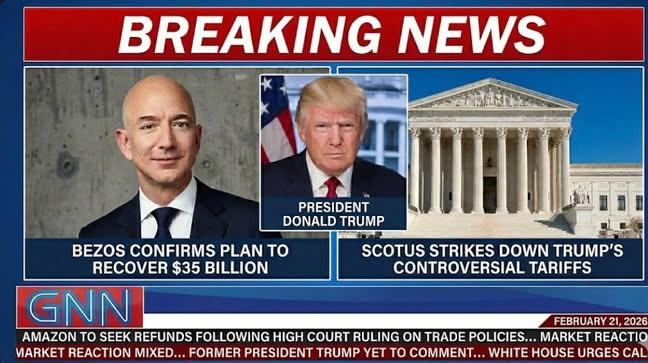
  • JUST IN: Amazon CEO Jeff Bezos Confirms Company Plans to Recover $35 Billion Following Supreme Court Decision That Struck Down Donald Trump’s Controversial Tariffs as Illegal

    In a major development following the U.S. Supreme Court’s decision striking down former President Donald Trump’s broad import tariffs as illegal, Amazon’s executive leadership — with founder and long-time figurehead Jeff Bezos playing a visible public role — has confirmed that the company intends to pursue reimbursement of roughly $35 billion in tariff costs it paid over the past year.
    While details remain preliminary, corporate spokespeople and legal advisors say Amazon is preparing to file claims with U.S. Customs and Border Protection and, if necessary, pursue litigation in federal courts to recover duties it argues were wrongfully collected under an emergency powers statute that the justices ruled the administration misused.Late last week, the Supreme Court — in a 6–3 ruling — held that the Trump administration lacked the legal authority under the International Emergency Economic Powers Act (IEEPA) to impose a sweeping global tariff regime that had slapped about a 10 % duty on most imports. The decision effectively voided the tariff framework and opened the door for importers to seek refunds of duties collected.
    Crypto Briefing
    That tariff regime had raised import costs for companies selling everything from consumer electronics to household goods and was widely blamed for squeezing profit margins and pushing some price increases onto U.S. consumers.
    Yahoo Finance

    Amazon’s Financial Strategy: Pursuing a $35 B Claim
    According to sources close to Amazon’s strategy team:
    Amazon estimates approximately $35 billion in tariff payments it hopes to recover from U.S. authorities, based on internal customs data and duty-reconciliation analyses spanning multiple quarters.
    The company is preparing formal refund claims, backed by detailed import records that document tariffs paid on goods sourced globally.
    If necessary, Amazon has signaled it will litigate aggressively to obtain repayment, arguing that without restitution, the ruling offers only theoretical relief — not financial redress.
    Officials caution, however, that the refund process will likely be complex and lengthy, potentially taking months or even years given the administrative procedures of U.S. Customs and the courts. That mirrors broader expectations within the business community that refunds for illegal tariff collections could take a long, complicated route to resolution.
    The Economic Times

    Market and Industry Reactions
    News of the Supreme Court’s decision sparked immediate stock market gains for import-dependent sectors, with shares of Amazon and other major online retailers rising on the prospects of lower cost pressures and improved long-term profitability.
    The Economic Times
    Industry groups and economists have largely supported the ruling, even as they caution that obtaining refunds will require substantial time and legal navigation. The decision not only constrains executive tariff authority but also forces a broader discussion about how trade policy should be implemented — and reviewed — under U.S. law

    What’s Next?
    Amazon’s legal and customs teams are expected to file the first major refund petitions within weeks.
    Other large importers — from consumer goods giants to manufacturers affected by the tariff regime — are also likely to pursue claims that could collectively total well over $100 billion in duties paid.
    AOL

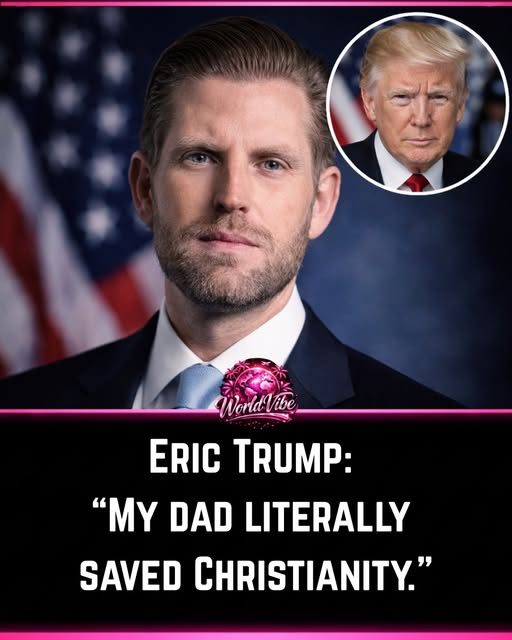
  • Eric Trump’s “Saved Christianity” Remark Fuels National Debate

    Eric Trump sparked widespread discussion after saying that his father, Donald Trump, “saved Christianity” through his leadership and policy agenda.

    During a recent appearance, Eric Trump pointed to religious liberty initiatives, judicial appointments, and expanded engagement with faith-based organizations as evidence that the administration strengthened and protected Christian values in public life. Supporters echoed that view, arguing the former president made defense of religious freedom a central pillar of his platform and delivered concrete policy outcomes aligned with faith communities.

    Critics, however, described the statement as political exaggeration. They argue that religious traditions are resilient institutions that transcend any single presidency, cautioning against framing spiritual identity through a partisan lens. Some also warn that blending faith too closely with political movements risks deepening cultural divisions.

    The reaction highlights a recurring theme in American civic life: the enduring and often contentious intersection of religion and politics. For some voters, elected officials play a key role in safeguarding moral and religious principles in the public sphere. Others maintain that religious conviction should remain institutionally separate from government authority.

    As debates continue, the relationship between belief, policy, and political leadership remains a powerful force shaping elections, legislation, and the broader national conversation.

  • What began as concern over private remarks has exploded into open constitutional

    What began as concern over private remarks has exploded into open constitutional debate. Lawmakers question judgment. Military authority faces limits. The 25th Amendment is no longer whispered — it’s spoken aloud in the Senate chamber…

    🔥

    If this line is crossed, history shifts instantly.What began as concern over private remarks has exploded into open constitutional debate. Lawmakers question judgment. Military authority faces limits. The 25th Amendment is no longer whispered — it’s spoken aloud in the Senate chamber…

    🔥

    If this line is crossed, history shifts instantly.What began as concern over private remarks has exploded into open constitutional debate. Lawmakers question judgment. Military authority faces limits. The 25th Amendment is no longer whispered — it’s spoken aloud in the Senate chamber…

    🔥

    If this line is crossed, history shifts instantly.

  • BREAKING NEWS: Trump STEP DOWN IMMINENT as 43 Senators Vote to END His Term!!

    explodes after reports claim 43 senators have voted to end Trump’s term, triggering emergency talks and nonstop chaos on Capitol Hill. Sources say the stunning tally sent shockwaves through both parties, with allies scrambling and rivals sensing blood in the water.


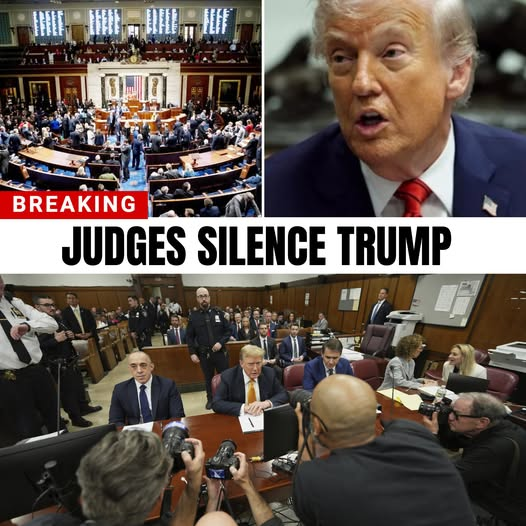
    Insiders describe frantic backroom meetings, mounting pressure, and a political clock suddenly ticking much faster. While the fallout unfolds, analysts warn this could mark a decisive turning point in Trump’s future — legally and politically.

    👇 See all below in the commentsexplodes after reports claim 43 senators have voted to end Trump’s term, triggering emergency talks and nonstop chaos on Capitol Hill. Sources say the stunning tally sent shockwaves through both parties, with allies scrambling and rivals sensing blood in the water.
    Insiders describe frantic backroom meetings, mounting pressure, and a political clock suddenly ticking much faster. While the fallout unfolds, analysts warn this could mark a decisive turning point in Trump’s future — legally and politically.

    👇 See all below in the commentsWashington

  • BREAKING: Pope Leo XIV humiliates fake Catholic J.D. Vance after he flew all the way to Rome to invite him to America’s 250th anniversary by bluntly rejecting the offer.

    The public embarrassments never end with this oaf…

    Instead of traveling to the States, Leo will spend July 4th on the Italian island of Lampedusa, a major entry point for migrants entering into Europe from Africa. Rather than engage in Trump’s jingoistic celebration of American military might, the pope is calling attention to the very same class of people that this White House spends much of its time demonizing.

    The rebuke of the invite is noteworthy because Vance personally invited the pope to the 250th celebration during his visit to Rome last year. This marks yet another instance of Leo snubbing the Trump administration, following soon after he rejected an invitation to join Trump’s corrupt “Board of Peace.”

    Vance likes to make a big show of being a Catholic convert, but everything he does is profoundly out of step with Catholic morality. He’s a key member of a regime that’s brutalizing migrants on a daily basis and Pope Leo has made defending migrants a cornerstone of his papacy.

    Trump has vowed that this July 4th will be “the most spectacular birthday party the world has ever seen” but judging by the deeply embarrassing failure that was his big military parade, our expectations are low. Pope Leo ain’t missing much!

    Please like and share!

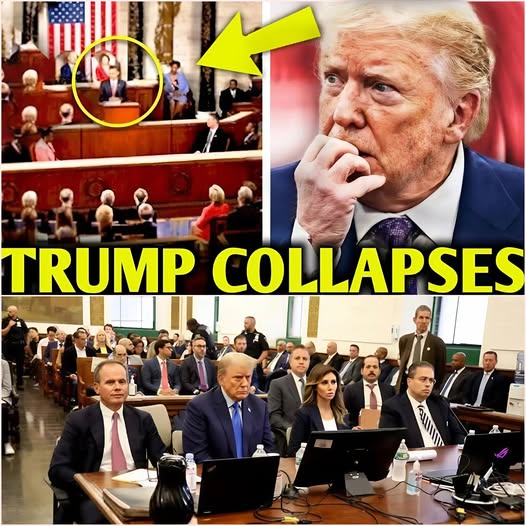
  • Trump Faces Public Humiliation as Court Orders Seizure of His Properties

    In a shocking legal development, Federal Judge Arthur Engoron has authorized the seizure of Donald Trump’s most prized properties, including Trump Tower, to satisfy a $464 million judgment. This unprecedented court order comes after Trump’s repeated refusal to post the required appeal bond. With the potential liquidation of his properties, including his iconic Manhattan real estate, the stakes for Trump’s business empire and political future have never been higher. In this video, we break down the legal implications, Trump’s defiant response, and how this massive legal setback could affect his 2024 campaign and legacy.In a shocking legal development, Federal Judge Arthur Engoron has authorized the seizure of Donald Trump’s most prized properties, including Trump Tower, to satisfy a $464 million judgment. This unprecedented court order comes after Trump’s repeated refusal to post the required appeal bond. With the potential liquidation of his properties, including his iconic Manhattan real estate, the stakes for Trump’s business empire and political future have never been higher. In this video, we break down the legal implications, Trump’s defiant response, and how this massive legal setback could affect his 2024 campaign and legacy.

  • BREAKING: A tense moment unfolded during a court proceeding involving A FORMER WHITE HOUSE FIGURE, drawing intense attention online after dramatic descriptions began circulating

    According to accounts shared by observers, the hearing — described as structured and tightly managed — became unexpectedly contentious. Reports claim raised voices and visible frustration in the courtroom, while judges were said to have stepped away from the bench before proceedings resumed.

    However, there has been no verified confirmation of a “walkout,” courtroom “chaos,” or any official breakdown of the judicial process. Court proceedings can include recesses, sidebar discussions, or procedural pauses that may appear dramatic when described out of context.

    Legal analysts caution that headlines often amplify emotionally charged moments, while official transcripts and court records provide a clearer account of what actually occurred.

    As more verified details emerge, observers are watching closely to determine whether this was a routine procedural interruption — or a moment that will carry broader legal implications.

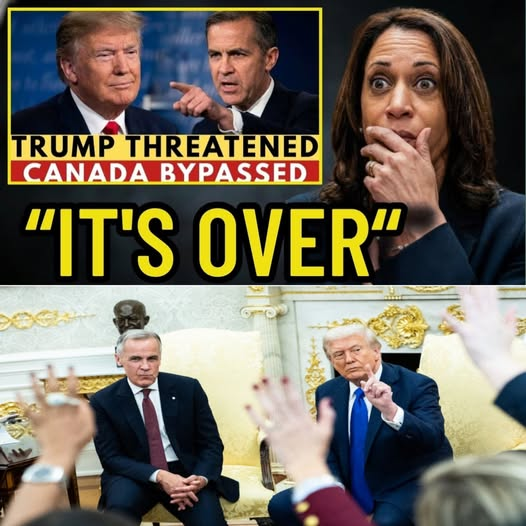
  • 1 MIN AGO: Trump Threatened Canada. Carney Built This $262M Bypass Instead

    You are watching a major shift in global trade happening in real time.

    For decades, Canada depended on the United States to access global markets. Canadian grain, minerals, timber, and energy mostly traveled south through American rail lines and ports. The system worked — until tariffs and trade tensions made it clear that access to U.S. infrastructure was no longer guaranteed.

    Instead of fighting a trade war, Canada chose a different strategy.

    The government invested $262 million to revive the long-abandoned Hudson Bay Railway and the Port of Churchill in northern Manitoba. Once considered unusable due to melting permafrost and collapsing tracks, the railway was rebuilt using advanced engineering and upgraded to handle heavy, high-capacity freight.

    Now, Canadian exports like wheat, potash, lithium, and rare earth minerals can travel entirely within Canada — straight to Churchill’s deep-water port — and ship directly to Europe and Asia without ever crossing U.S. borders.

    Even more significant, the railway and port are owned by a partnership of 41 Manitoba First Nations and northern communities, keeping profits local while strengthening national sovereignty.

    As Arctic ice melts and new northern shipping routes open, Churchill could become a key gateway to global trade.

    This isn’t just infrastructure. It’s strategy.

    Canada didn’t respond to pressure with retaliation — it built its own path.

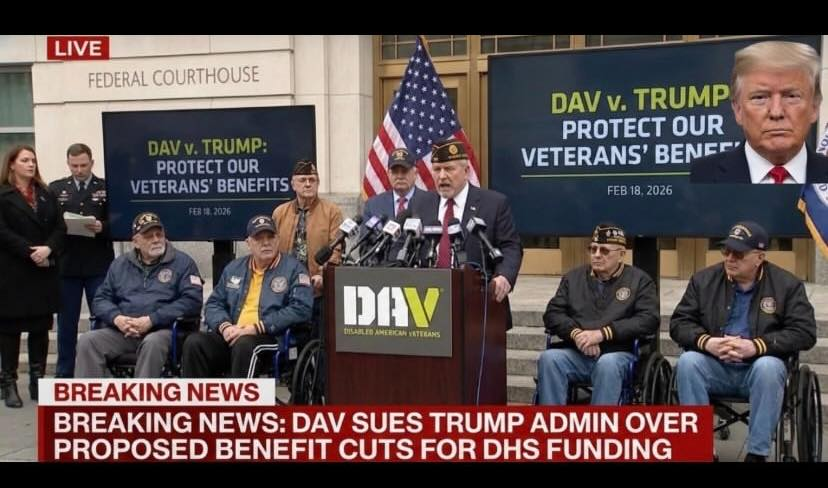
  • JUST IN; Disabled American Veterans (DAV) File Federal Lawsuit Against Donald Trump After Proposal to Slash SSI and Veterans Benefits to Reallocate Funds to United States Department of Homeland Security Amid Shutdown

    A major veterans advocacy group has filed a federal lawsuit against Donald Trump after the president proposed cutting Supplemental Security Income (SSI) and certain veterans benefits in order to redirect funding to Department of Homeland Security (DHS) amid a prolonged homeland security shutdown.

    The lawsuit, brought by the Disabled American Veterans (DAV), argues that the proposed reallocation of funds is both unlawful and harmful to millions of disabled veterans and low-income Americans who rely on SSI and related benefits. In its filing, the organization contends that Congress — not the executive branch — holds the constitutional authority over federal spending decisions.

    The Funding Dispute

    The legal challenge comes as DHS faces a funding crisis following a budget impasse in Congress. In response to the shortfall, the administration proposed reducing allocations for SSI and certain veterans programs and redirecting those funds to maintain homeland security operations.

    Administration officials have described the proposal as a temporary measure designed to ensure border security and national safety remain fully operational. They argue that difficult fiscal choices are necessary during a shutdown scenario.

    However, veterans advocates say the proposal places an unfair burden on service members who have already sacrificed for the country.

    DAV’s Argument

    In a statement accompanying the lawsuit, DAV leaders said cutting benefits for disabled veterans to resolve a funding standoff elsewhere in the federal government sets a “dangerous precedent.”

    The group claims the proposal could:

    Undermine financial stability for disabled veterans Violate statutory protections governing veterans benefits Bypass Congress’s exclusive power of the purse

    Legal experts note that courts historically scrutinize executive attempts to redirect congressionally appropriated funds without legislative approval.

    Political Fallout

    The lawsuit adds to growing political tension surrounding the DHS shutdown and broader budget negotiations. Lawmakers on both sides of the aisle have weighed in, with some supporting stronger homeland security funding and others warning against reductions to social safety net programs.

    The case is expected to move quickly through the federal court system given its constitutional implications and the immediate impact on benefit recipients. If the court grants an injunction, the administration could be temporarily blocked from implementing any proposed cuts while litigation continues.

    What Happens Next

    As the legal battle unfolds, millions of veterans and SSI recipients are watching closely. Advocacy groups say they are prepared to continue challenging any measures they believe threaten earned benefits.