Author: sadamhussaindomki4@gmail.com

  • Trump’s Nuclear Codes REVOKED After Erratic Behavior Caught on Camera!

    Trump’s Nuclear Codes REVOKED After Erratic Behavior Caught on Camera!👈

    Something extraordinary is being claimed—an action so serious it would represent the biggest national security crisis in U.S. history if true. According to reports circulating in some media circles, senior military leaders allegedly took emergency steps to prevent President Trump from accessing nuclear launch authority after behavior they deemed dangerously unstable.

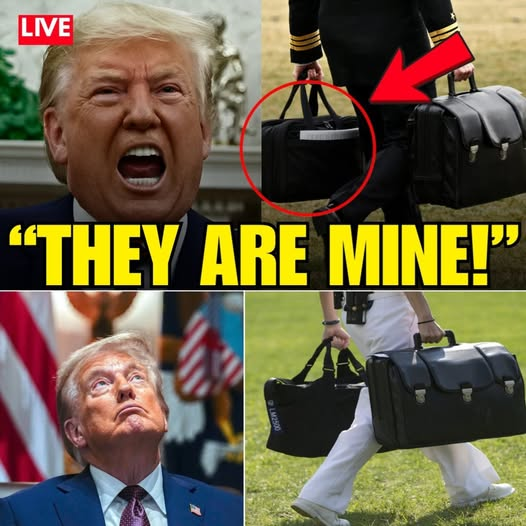
    The claim is that during a classified military briefing, Trump became agitated, rejected intelligence assessments, and spoke casually about using nuclear weapons in situations where they were clearly inappropriate. Sources allege this prompted the Secretary of Defense, after consulting top military and intelligence officials, to activate emergency safeguards—changing nuclear authentication codes and instructing the officer carrying the nuclear football not to present it.

    If such an action actually occurred, it would be unprecedented. The U.S. nuclear system is built on the assumption that the president alone has launch authority, with no checks or delays. Removing that authority would signal that military leaders believed the risk of presidential judgment outweighed the risk of breaking established command norms.

    The consequences would be enormous: a constitutional crisis, weakened nuclear deterrence, and a breakdown in civilian control of the military. It would also place the presidency itself in jeopardy—because a commander-in-chief deemed unfit to control nuclear weapons cannot credibly lead the armed forces.Trump’s Nuclear Codes REVOKED After Erratic Behavior Caught on Camera!👈

    Something extraordinary is being claimed—an action so serious it would represent the biggest national security crisis in U.S. history if true. According to reports circulating in some media circles, senior military leaders allegedly took emergency steps to prevent President Trump from accessing nuclear launch authority after behavior they deemed dangerously unstable.

    The claim is that during a classified military briefing, Trump became agitated, rejected intelligence assessments, and spoke casually about using nuclear weapons in situations where they were clearly inappropriate. Sources allege this prompted the Secretary of Defense, after consulting top military and intelligence officials, to activate emergency safeguards—changing nuclear authentication codes and instructing the officer carrying the nuclear football not to present it.

    If such an action actually occurred, it would be unprecedented. The U.S. nuclear system is built on the assumption that the president alone has launch authority, with no checks or delays. Removing that authority would signal that military leaders believed the risk of presidential judgment outweighed the risk of breaking established command norms.

    The consequences would be enormous: a constitutional crisis, weakened nuclear deterrence, and a breakdown in civilian control of the military. It would also place the presidency itself in jeopardy—because a commander-in-chief deemed unfit to control nuclear weapons cannot credibly lead the armed forces.
  • Trump STUNNED After Accidentally LOSING A KEY SWING STATE

    Trump STUNNED After Accidentally LOSING A KEY SWING STATE

    Mike Lindell, the MyPillow CEO and one of Donald Trump’s most loyal supporters, destroyed his own career by pushing false claims that the 2020 election was “rigged.” He spent millions of dollars on conspiracy theories and lawsuits, and he lost every single one. The result was financial collapse: massive debt, unpaid lawyers, evictions from warehouses, and a reported 95% drop in MyPillow sales.

    Despite all of this, Trump continues to praise and promote Lindell, even supporting his run for governor of Minnesota — not because Lindell is qualified, but because he is absolutely loyal. That exposes Trump’s biggest weakness: he values loyalty over competence.

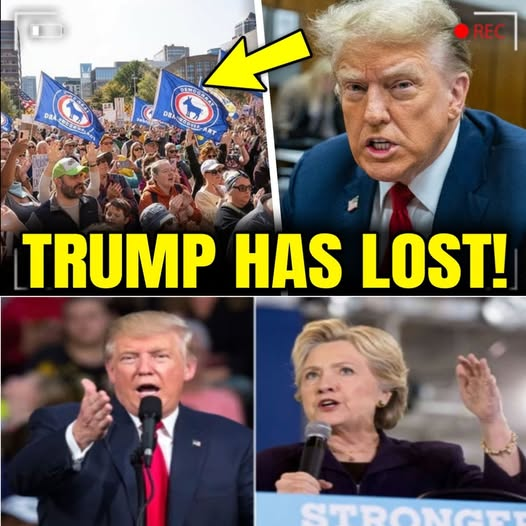
    In a swing state like Minnesota, that strategy is backfiring. Republican insiders are worried that Trump-backed candidates are becoming liabilities rather than assets. Trump’s silence after losing a key swing state speaks volumes.Trump STUNNED After Accidentally LOSING A KEY SWING STATE

    Mike Lindell, the MyPillow CEO and one of Donald Trump’s most loyal supporters, destroyed his own career by pushing false claims that the 2020 election was “rigged.” He spent millions of dollars on conspiracy theories and lawsuits, and he lost every single one. The result was financial collapse: massive debt, unpaid lawyers, evictions from warehouses, and a reported 95% drop in MyPillow sales.

    Despite all of this, Trump continues to praise and promote Lindell, even supporting his run for governor of Minnesota — not because Lindell is qualified, but because he is absolutely loyal. That exposes Trump’s biggest weakness: he values loyalty over competence.

    In a swing state like Minnesota, that strategy is backfiring. Republican insiders are worried that Trump-backed candidates are becoming liabilities rather than assets. Trump’s silence after losing a key swing state speaks volumes.

  • BREAKING: Trump Panics as Mitch McConnell Delivers a Career-Shaking Final Speech

    BREAKING: Trump Panics as Mitch McConnell Delivers a Career-Shaking Final Speech

    What happened on the Senate floor today was not a personal feud or an emotional outburst. It was a calculated institutional move. Mitch McConnell did not speak out of anger; he spoke with intent. Leaders like McConnell do not burn bridges unless they already have another road prepared. What he unveiled was a permission structure for other Republican senators to move away from Donald Trump without paying an immediate political price.

    This speech was not written overnight. It was carefully drafted to frame opposition to Trump as a constitutional and legal obligation, not a personal or moral judgment. That distinction matters. It gives cover to senators who fear their base but worry about electability and long-term power.

    By taking the heat himself, McConnell became a shield for vulnerable members of his conference. This was the Senate reasserting itself as an institution and signaling that the cost of alignment with Trump now outweighs the benefit. This is not theater. It is a structural shift—one that could reshape the Republican Party and the choices voters face in the next election cycle.BREAKING: Trump Panics as Mitch McConnell Delivers a Career-Shaking Final Speech

    What happened on the Senate floor today was not a personal feud or an emotional outburst. It was a calculated institutional move. Mitch McConnell did not speak out of anger; he spoke with intent. Leaders like McConnell do not burn bridges unless they already have another road prepared. What he unveiled was a permission structure for other Republican senators to move away from Donald Trump without paying an immediate political price.

    This speech was not written overnight. It was carefully drafted to frame opposition to Trump as a constitutional and legal obligation, not a personal or moral judgment. That distinction matters. It gives cover to senators who fear their base but worry about electability and long-term power.

    By taking the heat himself, McConnell became a shield for vulnerable members of his conference. This was the Senate reasserting itself as an institution and signaling that the cost of alignment with Trump now outweighs the benefit. This is not theater. It is a structural shift—one that could reshape the Republican Party and the choices voters face in the next election cycle.

  • IT IS SIGNED: The Senate Leader Just Put His Signature On The Official Removal Order!

    IT IS SIGNED: The Senate Leader Just Put His Signature On The Official Removal Order!⚡

    A rare silence has fallen over Washington—the kind that signals something irreversible. You’ve likely seen the footage: the Senate leader stepping forward, pausing, and signing a removal order. It looked like routine paperwork, but it wasn’t. That signature marked the moment political debate ended and administrative power took over.

    With the ink dry, the system shifted instantly. The order became a direct command to the federal bureaucracy, triggering automatic protocols that strip a former president of official authority and privileges. Access is revoked, records are updated, and security arrangements change—quietly, efficiently, and without ceremony.

    This wasn’t about spectacle. It was about stability. The Senate acted as a constitutional court, and the signature certified its verdict. For the country, it was a stress test of democratic institutions. Whatever one’s politics, the message was clear: the machinery of government can still enforce its rules, even at the highest level, when the moment demands it.IT IS SIGNED: The Senate Leader Just Put His Signature On The Official Removal Order!

    A rare silence has fallen over Washington—the kind that signals something irreversible. You’ve likely seen the footage: the Senate leader stepping forward, pausing, and signing a removal order. It looked like routine paperwork, but it wasn’t. That signature marked the moment political debate ended and administrative power took over.

    With the ink dry, the system shifted instantly. The order became a direct command to the federal bureaucracy, triggering automatic protocols that strip a former president of official authority and privileges. Access is revoked, records are updated, and security arrangements change—quietly, efficiently, and without ceremony.

    This wasn’t about spectacle. It was about stability. The Senate acted as a constitutional court, and the signature certified its verdict. For the country, it was a stress test of democratic institutions. Whatever one’s politics, the message was clear: the machinery of government can still enforce its rules, even at the highest level, when the moment demands it.

  • Epstein Survivor Drops CLIENT LIST BOMB On Trump

    Epstein Survivor Drops CLIENT LIST BOMB On Trump⚡

    This is a major development in the Jeffrey Epstein case. Epstein survivor Lisa Phillips has revealed that survivors are no longer waiting on the U.S. government to act. After repeated claims by Donald Trump’s Department of Justice, Pam Bondi, and Kash Patel that there was no “client list” and no evidence beyond Epstein and Ghislaine Maxwell, survivors are now pushing back publicly.

    Phillips says she and other survivors have been quietly working together, comparing notes, identifying overlapping experiences, shared locations, agencies, and even institutions connected to Epstein’s trafficking network. With more than 1,200 victims, they argue patterns are impossible to ignore.

    At the same time, internal FBI emails contradict official statements, referencing multiple co-conspirators and active engagement with their legal counsel. Now, the DOJ claims it has suddenly “discovered” over one million additional Epstein-related documents—after missing the legal deadline to release them.Epstein Survivor Drops CLIENT LIST BOMB On Trump⚡

    This is a major development in the Jeffrey Epstein case. Epstein survivor Lisa Phillips has revealed that survivors are no longer waiting on the U.S. government to act. After repeated claims by Donald Trump’s Department of Justice, Pam Bondi, and Kash Patel that there was no “client list” and no evidence beyond Epstein and Ghislaine Maxwell, survivors are now pushing back publicly.

    Phillips says she and other survivors have been quietly working together, comparing notes, identifying overlapping experiences, shared locations, agencies, and even institutions connected to Epstein’s trafficking network. With more than 1,200 victims, they argue patterns are impossible to ignore.

    At the same time, internal FBI emails contradict official statements, referencing multiple co-conspirators and active engagement with their legal counsel. Now, the DOJ claims it has suddenly “discovered” over one million additional Epstein-related documents—after missing the legal deadline to release them.

  • New Epstein documents include a claim of an Oklahoma ‘murder’

    Oklahoma, in January 2000. The caller said a woman was found with her head “blown off” in the small town in northeast Oklahoma days after reporting to police she had been raped by Epstein and Donald Trump. The caller described the death as a murder. The FBI report was in the nearly 30,000 new documents released by the U.S. Justice Department on Dec. 23. “Some of these documents contain untrue and sensationalist claims made against President Trump that were submitted to the FBI right before the 2020 election,” the Justice Department stated in a social media post. “To be clear: the claims are unfounded and false, and if they had a shred of credibility, they certainly would have been weaponized against President Trump already,” the Justice Department stated. The FBI got the call about the Oklahoma death at its National Threat Operations Center on Oct. 27, 2020, according to the three-page report. The presidential election that year was on Nov. 3. The caller said he took Trump to the airport in 1995 while working as a limousine driver in the Dallas/Fort Worth area, according to the report. He said he overhead Trump on a cell phone continuously stating the name “Jeffrey” and making references to “abusing some girl.” The caller told the FBI he was “a few seconds from pulling the limousine over on the median and within a few seconds of pulling him out of the car and hurting him due to some of (the) things he was saying.” The caller told the FBI he spoke to a woman in 1999 in the days before Christmas about how he met Trump. He said she told him Trump had raped her along with Epstein, according to the report. He also said the woman told him “some girl with a funny name ‘took me into a fancy hotel or building, that’s how it happened.’” The caller said he urged the woman to call the police, according to the report. He said she replied, “I can’t. They will kill me.” He said the woman told him on Christmas Day that she had called the police after all. He said he told her she had “done good.” Ghislaine Maxwell and Donald Trump are shown in this image released by the Department of Justice on Dec. 23, 2025, as part of a new trove of documents from its investigations into the late financier and convicted sex offender Jeffrey Epstein. He said he learned on Jan. 10, 2000, from his girlfriend that the woman was dead, according to the report. He said officers on the scene had stated there was no way it was suicide but the coroner stated it was suicide. He said his girlfriend later told him the woman committed suicide because she had gotten cocaine from a Mexican drug cartel. The caller said he “feels the murder is a cover for” Ghislaine Maxwell, a longtime Epstein associate, according to the report. Maxwell is serving 20 years in prison after being convicted of conspiring with Epstein to entice girls to travel for illicit sex. Epstein died by suicide, authorities have concluded, while awaiting trial on similar charges in a Manhattan jail in 2019. Get the News Alerts newsletter in your inbox. Get alerted to the latest stories to stay on top of the news Delivery: Varies Your Email Trump is mentioned repeatedly in the new documents, including as a passenger on Epstein’s private plane for at least eight flights from 1993 to 1996. The president has not been accused of any wrongdoing in relation to Epstein, who was a wealthy and well-connected financier. The Justice Department blacked out the names of the caller, his girlfriend and the woman who died. A 19-year-old student from Kiefer died on Jan. 10, 2000, according to death notices in two newspapers, the Tulsa World and the Sapulpa Herald. The state’s chief medical examiner, Dr. Eric Pfeifer, told The Oklahoman on Dec. 24 that the death of Dusti Rhea Duke was ruled a suicide by a gunshot to the head. Her body was found at an address in Sapulpa, which is near Kiefer, according to medical examiner records. The caller also claimed to know the identify of John Doe No. 2 and said the person was connected to Bill and Hillary Clinton, according to the report. John Doe No. 2 was the name given to a possible suspect in the truck bomb attack on the Oklahoma City federal building in 1995. The FBI released sketches of two suspects based on the descriptions of a mechanic at a Kansas body shop where the truck was rented. A sketch of John Doe No. 1 was identified quickly as Timothy McVeigh, who was executed in 2001 for the bombing. After a worldwide search, the FBI concluded John Doe No. 2 never existed and the mechanic mistakenly described an innocent Army private who had been helping a friend move.

  • A Quiet Christmas Sentence That Echoed Across the Internet

    No photo description available.

    Zohran Mamdani came through the orphanage door carrying stuffed bears and a box of candy canes, just another politician doing a holiday photo-op. The kids tore into the sweets while staff propped up a phone to catch the usual handshake footage. No one expected the room to go still, the way classrooms do when the principal suddenly steps in. But the moment Mamdani reached the tiny microphone—no script, no podium—conversations dropped to a hush and even the youngest boy stopped kicking the table leg.He started with thank-yous, then paused so long people thought the sound had cut out. When he spoke again his voice was soft, almost private, as if he were telling a bedtime story to one child instead of forty. “You are not leftovers,” he said. “You are not the second draft of someone else’s life.” A volunteer near the back pressed her palm to her mouth; tears slipped under her glasses. No one looked at her, because the same watery shine was spreading across every adult face.The kids didn’t clap—they rarely do when adults cry—but they straightened their backs as if someone had tied strings to their spines. One girl, maybe eight, leaned forward so far her braids brushed the floor, eyes wide, waiting for the next sentence like it might be her name. Mamdani didn’t offer miracles. He simply promised that the building they slept in was not the border of their world, that love would come to them without an application form, that their stories were already worth telling even if the endings were still unwritten.A staff member filmed the last minute on her phone, planning to send it to donors as proof the night was special. Instead the clip leapt onto Twitter, then TikTok, then late-night group chats where people admitted they cried in bathroom stalls. Supporters called it proof that politics can still feel human, while critics grumbled about cameras in a shelter and motives hiding behind misty eyes. Both sides kept watching, because the hush in the room felt rarer than any applauseBy morning the orphanage phone rang off the hook—strangers asking how to mail bikes, college students volunteering tutoring hours, a grandmother in Oregon shipping handmade quilts because “every child deserves one thing sewn just for them.” Staff answered in stunned voices, half laughing, half sobbing, realizing a handful of sentences had done more than any fundraising letter. Whether the moment was planned or pure no longer mattered; the kids were already opening giant boxes addressed to them by name, proof that words can travel faster than doubt.

  • One Short Sentence That Made a City Remember Who Lives Here

    Zohran Mamdani was sipping tea in a Queens cafĂ© when the alert flashed across his phone: Councilmember Vickie Paladino told a radio host it was time to “deport Muslims from Western countries.” He didn’t finish the cup. Within minutes he was outside on the sidewalk, camera lights already glowing, and said the only thing that felt true: “Nearly one million Muslims live in New York City. We belong here—just like every other New Yorker.” The line took eight seconds to speak and hours to stop echoing.Paladino’s words were not framed as policy; they landed as a dare, a test of how far open bigotry can travel on the airwaves without bumping into shame. For many Muslim New Yorkers the phrase carried older echoes—of post-9/11 detentions, of “go back where you came from” shouted in school hallways, of boarding passes scribbled with “SSSS” for extra screening every holiday season. Mamdani’s reply turned the dare backward, forcing the city to decide whether those memories still count or whether they can be revived in fresh daylight.The pushback was instant. Paladino’s defenders claimed she was warning about “radical ideology,” not calling for ethnic cleansing, and accused Mamdani of crying victim to build a national mailing list. Cable panels split into shouting halves; Twitter threads stacked thousands deep. But beneath the noise a simpler transaction occurred: Muslim nurses, food-cart vendors, EMTs, and students suddenly heard a public official state their membership as fact, not plea. Text chains lit up with screenshots of the quote and heart-emojis that looked small but carried the weight of years.Inside City Hall, colleagues who usually avoid foreign-policy landmines were asked to choose. A handful released statements calling Paladino’s language “unhelpful” or “divisive,” the kind of adjectives that sound like condemnation but dissolve under hard light. Others stayed silent, calculating whether Muslim votes outweigh the rage of constituents who cheer any attack on Islam. Their quiet became its own data point, proof that belonging is still negotiable in the marketplace of courageMeanwhile, the practical city kept moving. The same evening a Bangladeshi mechanic closed his garage in the Bronx, locked the gate, and told his teenage son to walk home with a friend—just in case. A Yemeni bodega worker taped Mamdani’s quote to the Plexiglas by the register, turning the sentence into a tiny shield against customers who might feel licensed to sneer. In Brooklyn, a sixth-grader wore the American-flag hijab her mother pressed every morning and told her class during current-events time, “I’m not a visitor, I’m from Bay Ridge.” None of these actions made television, but they all started with eight seconds of someone saying out loud what they had waited to hear.The fight is far from over. Paladino has since claimed her words were “hyperbolic,” then doubled down with fund-raising emails calling the backlash “cancel culture.” Mamdani, for his part, keeps repeating the same line everywhere he goes, stripping it of adjectives so it can’t be trimmed or footnoted. Each time he speaks it, another Muslim New Yorker leans a little straighter, another ally remembers why pluralism was invented, and another skeptic rolls eyes—yet even the eye-roll acknowledges the sentence exists, that the claim has entered the city’s permanent record. Because facts, once uttered clearly, are hard to deport.

  • c1 Six Months After Her Death, Virginia Giuffre’s Voice Is Louder Than the Silence That Tried to Bury It

    Six months have passed since she left this world, and yet her voice has only grown louder.

    On the calendar, the date feels ordinary. Another square crossed out. Another quiet marker of time moving forward. But for those who read her words, who sit with them late at night when the world is silent, the passing of six months feels heavy—like standing at the edge of something unfinished. Virginia Giuffre is gone, but the truth she carried refuses to rest.She did not live to see her memoir published. She never held the book in her hands, never turned its pages, never saw the way readers would pause, reread sentences, or set the book down just to breathe. And yet, page after page, her presence is unmistakable. Not as a memory fading with time, but as a voice sharpened by it.

    Her words do not beg for sympathy. They do not ask to be believed. They stand on their own—steady, direct, and unflinching. This is what makes them so powerful. She writes not as someone seeking revenge, but as someone who has survived silence and decided it no longer had authority over her life.For years, silence was the currency of power. It was purchased, enforced, normalized. It followed her into rooms where the truth was never meant to enter. It lingered in contracts, closed doors, and polite denials. And for a long time, the world accepted that silence as order.In her memoir, she describes the cost of being unheard—not just legally or publicly, but internally. The way silence reshapes memory. The way it teaches victims to doubt themselves. The way it convinces them that survival must happen quietly, without disruption. Her writing exposes this process with painful clarity, not through sensational detail, but through emotional precision.

    What haunts the reader most is not the names or the places, but the waiting. The years spent knowing the truth while watching the world look elsewhere. The burden of carrying a story that powerful institutions preferred to keep buried. Each chapter reads like a door she tried to open again and again—sometimes slammed shut, sometimes cracked just enough to let a little light through.She writes about power not as something abstract, but as something deeply personal. Power had faces. Voices. Expectations. It shaped how she was treated and how she was dismissed. And yet, she never allows it to define her entirely. Instead, she turns the lens back on it, asking questions that echo long after the final page.

    What does power fear most?
    Why does truth become dangerous only when it refuses to disappear?And who benefits when silence is framed as peace?

    There is a line in the memoir that lingers like a final heartbeat: â€œThey wanted me forgotten. Instead, I became the story they can’t erase.” It does not read as triumph. It reads as inevitability. As if she understood, even then, that truth has its own timing—and that it does not require permission to surface.

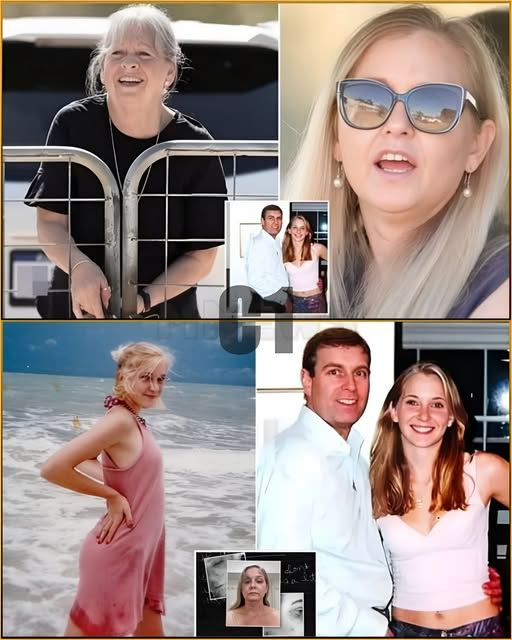
    Six months after her passing, her words are traveling where she no longer can. They reach readers who never followed the headlines. They reach those who once doubted, those who stayed neutral, and those who were too afraid to look closely before. The book does not shout. It does something far more unsettling—it stays.There is grief in knowing she is not here to witness the impact. Grief in imagining the conversations she might have had, the interviews she never gave, the quiet relief she might have felt seeing her story finally exist without interruption. But there is also a strange sense of justice unfolding—not in courts or statements, but in consciousness.

    Because once words are released, they cannot be recalled. Once a story is told fully, it cannot be untold.

    Her memoir does not claim to destroy institutions or rewrite history overnight. What it does instead is more enduring. It challenges the idea that silence equals resolution. It reminds us that truth does not vanish when ignored—it accumulates. It waits. And when it finally speaks, it does so with the weight of everything that tried to suppress it.

    Today, six months after Virginia Giuffre’s passing, her voice does not sound distant. It sounds present. It sounds urgent. It sounds alive in every reader who pauses and thinks, This should never have been buried.

    She is gone.
    But her words are here.
    And they are not done speaking.

  • WHEN LATE-NIGHT WENT QUIET — AND A SINGLE MOVE REWROTE THE MEDIA CONVERSATION-phuongchi

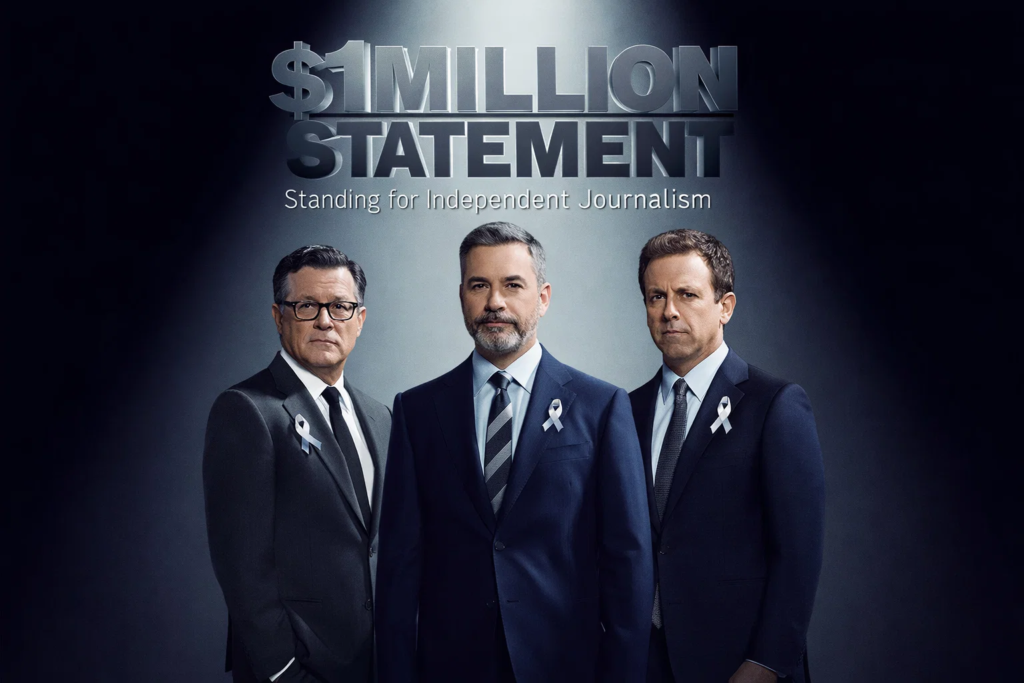
    There were no monologues, no studio laughter, and no on-air declarations, only a coordinated pledge that appeared the same day across multiple late-night teams.According to people familiar with the matter, Jimmy KimmelStephen Colbert, and Seth Meyers committed one million dollars toward independent journalism initiatives.

    The timing, not the amount alone, ignited debate, because the move arrived instantly, quietly, and without the promotional cues audiences have learned to expect.Insiders describe the pledge as intentional restraint, signaling seriousness rather than performance, and suggesting that comedy’s loudest statement can sometimes be silence.

    In media circles, the absence of cameras became the story, interpreted as rejection of spectacle in favor of institutional alignment.

    For years, late-night hosts have used satire to comment on power, but this gesture suggested an evolution from commentary to participation.

    Supporters argue the pledge represents civic responsibility, claiming entertainers who profit from public attention should invest in information ecosystems sustaining democracy.Critics counter that celebrity funding risks distorting journalistic independence, replacing public accountability with private patronage.

    That tension framed immediate conversation, because motives appeared both altruistic and consequential depending on perspective.

    Washington responded cautiously, with officials declining comment while quietly acknowledging that the optics complicate already volatile funding debates.

    Media executives privately questioned whether the move sets precedent, encouraging entertainers to fill gaps once addressed through policy.

    Others argued precedent already exists, pointing to philanthropy historically supporting investigative reporting when traditional revenue falters.

    The distinction, they note, lies in visibility, because famous donors reshape perception even without public statements.

    Observers highlighted how the pledge contrasted sharply with recent trends, where political gestures often seek viral amplification.

    Here, amplification arrived anyway, driven by curiosity about why nothing was said publicly.

    Silence, paradoxically, traveled faster than noise, prompting speculation about coordination and long-term intent.

    Sources suggest discussions began months earlier, amid growing concern over shrinking local newsrooms and declining trust.

    Those conversations reportedly included journalists, producers, and hosts wrestling with comedy’s limits during institutional erosion.