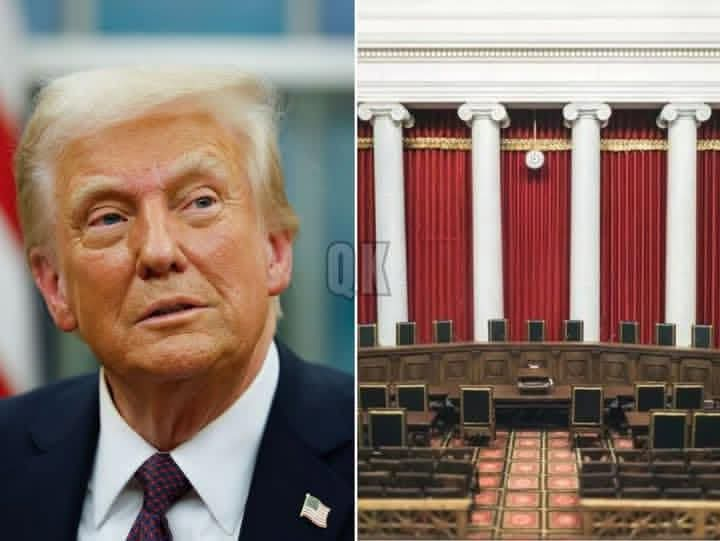
The United States Supreme Court—through its Public Information Office—issued what insiders are calling a rare and extraordinary public clarification that has instantly shaken Washington and ignited bipartisan alarm. According to the statement circulating among legal and congressional sources, Donald Trump’s military action in Venezuela and the arrest of Nicolás Maduro were carried out without Congressional authorization, raising serious constitutional and legal concerns at the highest level of government.The Supreme Court reportedly cited Article I, Section 8 of the U.S. Constitution, which grants Congress—not the President—the exclusive authority to declare war, alongside alleged violations of the War Powers Resolution. Legal analysts say this places the action outside the normal bounds of executive power and pushes it into uncharted constitutional territory. “When Congress is bypassed in matters of war and foreign military engagement, the entire balance of power is at risk,” one constitutional scholar warned.
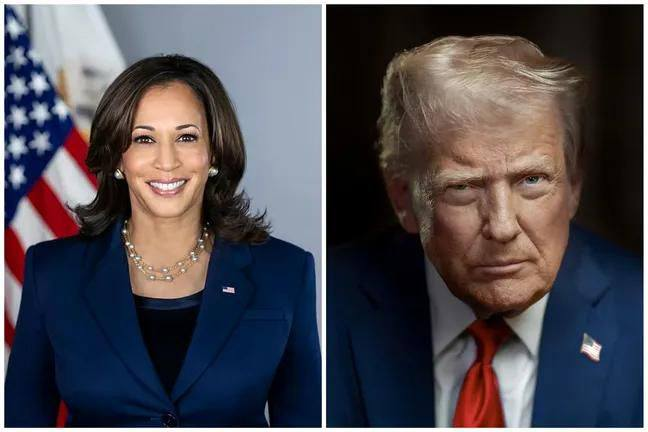
JUST IN: Kamala Harris Accuses Trump of Putting Oil Deals Above Democracy in Venezuela
In a sharply worded statement that is already sending ripples through Washington, Kamala Harris accused former President Donald Trump of sacrificing democratic principles and the rule of law in pursuit of oil interests and personal power on the global stage.
“This is not about drugs or democracy. It is about oil and Donald Trump’s desire to play the regional strongman,” Harris said. “If he cared about either, he wouldn’t pardon a convicted drug trafficker or sideline Venezuela’s legitimate opposition while pursuing deals with Maduro’s cronies.”
Oil Over Principles?
Harris’s remarks cut to the core of a long-running controversy surrounding U.S. policy toward Venezuela, a nation with some of the world’s largest proven oil reserves but also one of the most severe political and humanitarian crises in the Western Hemisphere.
According to Harris, Trump’s actions reveal a consistent pattern: using foreign policy not to defend democracy or combat corruption, but to secure strategic advantages and bolster his image as a dominant power broker. She suggested that Venezuela’s vast oil wealth, rather than concern for democratic governance, has been the driving force behind these decisions.
The Pardon Controversy
Central to Harris’s criticism is Trump’s decision to pardon a convicted drug trafficker—an action she argues undermines claims that his Venezuela policy was rooted in fighting narcotics or corruption. Critics have long questioned how such pardons align with a tough-on-crime or anti-drug narrative, particularly when tied to foreign policy justifications.
Harris framed the pardon as emblematic of a broader hypocrisy: publicly condemning authoritarianism and criminal networks while privately empowering or excusing them when it suits political or economic goals.Harris also accused Trump of sidelining Venezuela’s legitimate democratic opposition while seeking arrangements with figures close to Nicolás Maduro. For years, the United States officially recognized opposition leaders as the rightful representatives of the Venezuelan people, condemning Maduro’s government as illegitimate and authoritarian.
By suggesting Trump pursued deals with “Maduro’s cronies,” Harris implied that behind-the-scenes negotiations may have weakened the opposition’s leverage and credibility, effectively prolonging the very regime U.S. policy claimed to oppose.
A Broader Political Message
Beyond Venezuela, Harris’s statement is widely being interpreted as part of a broader argument about Trump’s approach to power and governance. She portrayed him as someone willing to bend laws, ignore democratic norms, and overlook human rights in order to project strength and secure lucrative outcomes.
“This is about values,” one senior Democratic aide said privately. “Do we stand for democracy consistently, or only when it’s convenient?”
What Comes Next
Harris’s comments are likely to intensify debate over U.S.–Venezuela policy and reignite scrutiny of Trump-era foreign decisions as the political climate heats up. Supporters of Trump are expected to push back, arguing that his approach was pragmatic and focused on American interests, while critics say those interests were narrowly defined and dangerously transactional.
For now, Harris has drawn a clear line: in her view, the issue is not drugs, not democracy—but oil, power, and a former president’s willingness to blur ethical boundaries to get both.
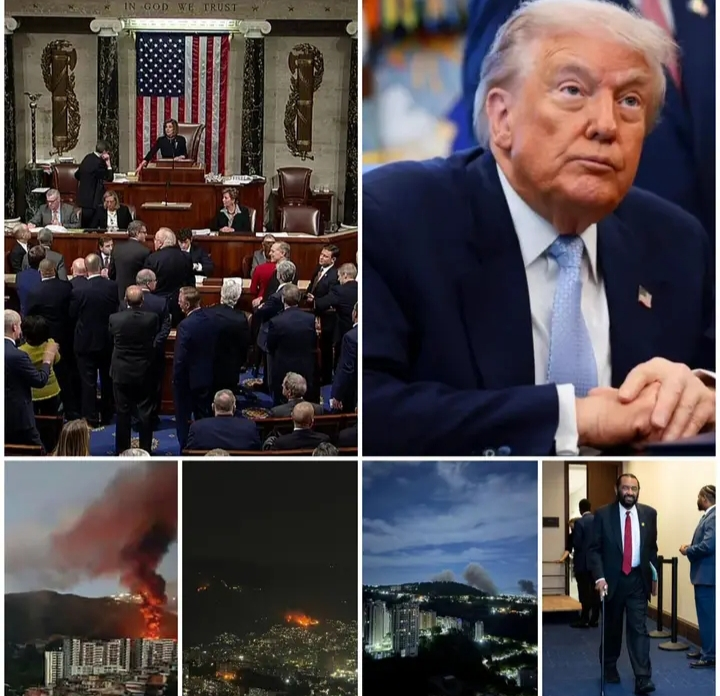
CONGRESS ERUPTS AS IMPEACHMENT 3.0 LOOMS FOLLOWING SHOCKING VENEZUELA STRIKE AND GLOBAL LEGAL FALLOUT Washington is reeling tonight after a cascade of extraordinary developments that lawmakers are already calling one of the most dangerous constitutional crises in modern U.S. history.
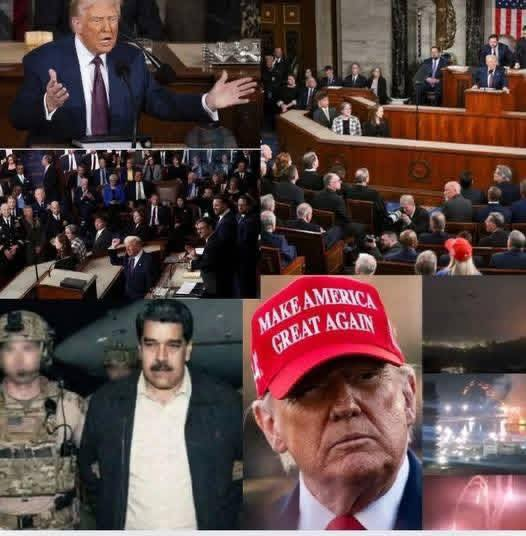
Just hours after reports surfaced that former President Donald Trump authorized an overnight military strike on Venezuela, senior members of Congress moved swiftly, launching what insiders are calling Impeachment 3.0 — a response to what they describe as an unauthorized act of war carried out without congressional approval. According to multiple sources familiar with the situation, the strike was followed by something even more alarming:
the forcible seizure of Venezuelan President Nicolás Maduro and his wife, who were allegedly removed from the country and transported to the United States to face criminal charges. If confirmed, legal experts warn the operation could represent a stunning breach of international law, raising immediate questions about sovereignty, kidnapping, and violations of the U.S. Constitution. “YOU CANNOT ATTACK ANOTHER COUNTRY WITHOUT CONGRESS”
Members of both chambers wasted no time responding. During emergency briefings, lawmakers issued blistering statements condemning the alleged action, emphasizing that only Congress has the power to authorize war. “One thing the president should understand is that you cannot attack another country without the approval of Congress,” one senior lawmaker said. Others were even harsher, accusing Trump of either not understanding the Constitution — or simply ignoring it. “We have failed to educate an uninformed president who has never read the Constitution and does not know — or care — how the law works,” another member said.
Behind closed doors, aides say conversations quickly shifted from outrage to damage control, as officials scrambled to assess how far the crisis could spiral. WHISTLEBLOWERS: “THIS WAS PERSONAL” As the political firestorm intensified, whistleblowers reportedly stepped forward with claims that have only fueled the chaos. According to these accounts, the Venezuela strike was not driven by imminent national security threats, but by what they describe as a personal vendetta.They allege the operation was designed as retaliation — and warn that Venezuela may have been only the first target. Sources familiar with internal discussions claim intelligence officials are now quietly assessing the risk that another country could face a sudden, unexpected attack, carried out under similar reasoning. Those warnings have sent shockwaves through diplomatic circles worldwide. INTERNATIONAL COURTS ENTER THE PICTURE As pressure mounts at home, attention has turned overseas. Sources say officials at the International Criminal Court in The Hague are closely reviewing the situation, with discussions reportedly underway about potential legal action tied to war crimes and unlawful detention.
While no official confirmation has been issued, insiders say the mere possibility of an international arrest warrant involving a former U.S. president has stunned diplomats and legal scholars alike. “This is uncharted territory,” one international law expert said. “The implications would be global.” WHAT IS TRUMP DEMANDING? Adding another explosive layer to the story, new details are emerging about what Trump is allegedly demanding in exchange for the release of Maduro and his wife.
Sources describe the demands as extraordinary, with potential consequences that could destabilize already fragile diplomatic relationships across the region. Officials familiar with the negotiations say the terms, if made public, could ignite an international crisis overnight. So far, neither side has confirmed the specifics — but the silence has only intensified speculation. A MIDNIGHT MESSAGE THAT HAS SUPPORTERS ON EDGE
As if the situation weren’t volatile enough, sources close to Trump say he is preparing a late-night Truth Social post, expected to drop around midnight. According to those familiar with the draft language, Trump plans to declare “TOTAL WAR” against his enemies, not only abroad but inside the United States. What’s most striking, insiders say, is that even some of Trump’s own supporters are reportedly alarmed, privately expressing concern over what he may reveal — and what consequences could follow.
A MOMENT THAT COULD CHANGE EVERYTHING With impeachment proceedings accelerating, international courts circling, whistleblowers sounding alarms, and global tensions rising by the hour, Washington finds itself bracing for what could become a defining moment in American history. This story is still unfolding. Details are changing rapidly. And what happens next could reshape U.S. politics — and global stability — for years to come.
BREAKING: Congress Files Impeachment Articles Against Trump Over Venezuela Action, Citing Constitutional Violations.
According to the filing, the action taken was not a legitimate military operation but an illegal act of aggression. By authorizing force against a sovereign nation without congressional approval, Trump is accused of violating Article I, Section 8 of the U.S. Constitution as well as the War Powers Act. Lawmakers say this represents a direct challenge to Congress’s sole authority to declare war.
But that wasn’t the end of it. The impeachment filing reportedly outlines additional alleged violations, painting a broader picture of what Congress calls a dangerous pattern of executive overreach. Yet what has truly stunned observers is Trump’s reaction to the move—an unusually awkward and defiant response that has already ignited backlash, confusion, and intense debate across the political spectrum…Lawmakers on Capitol Hill have filed articles of impeachment against former President Donald Trump, accusing him of authorizing the use of military force against Venezuela without congressional approval. According to the filing, the action did not constitute a legitimate defensive operation but an unlawful act of aggression against a sovereign nation, raising serious constitutional concerns.
The impeachment articles argue that the authorization violated Article I, Section 8 of the U.S. Constitution, which grants Congress the exclusive power to declare war, as well as the War Powers Act. Sponsors of the measure say the move represents a direct challenge to legislative authority and reflects a broader pattern of executive overreach. The filing reportedly details additional alleged violations tied to national security decision-making and the circumvention of congressional oversight.
Adding to the controversy was Trump’s immediate response, which observers described as unusually defiant and disjointed. In public remarks and online statements, he dismissed the impeachment effort as politically motivated, a reaction that has fueled sharp backlash, confusion among allies, and renewed debate over presidential war powers. As details continue to emerge, the impeachment push is expected to intensify partisan divisions and reignite long-standing arguments about the limits of executive authority in matters of war and foreign policy.
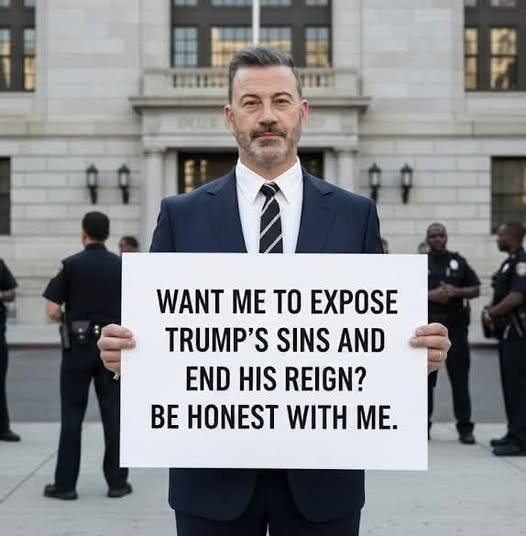
BREAKING: KIMMEL VOWS ON LIVE TV TO DESTROY TRUMP’S CRIMES AND SAVE AMERICA: “HE’LL LOSE ALL POWER IMMEDIATELY – I’M ENDING THIS NIGHTMARE TONIGHT!”
Jimmy Kimmel burst onto the stage tonight clutching a glowing red folder labeled “TRUMP’S CRIMINAL EMPIRE – THE TAKEDOWN BEGINS NOW.” No laughs. No applause. Just a furious host ready to unleash apocalypse on a presidency.
He didn’t whisper. He roared.
“I’m destroying every crime Donald Trump has committed to save the American people – election fraud, hush money schemes, classified docs theft, insurrection plotting. I have the evidence: leaked memos, witness tapes, financial trails proving he’s bled billions from taxpayers for his personal gain.
Tonight, I expose it all, and he loses power immediately. No more Oval Office, no more influence – stripped, impeached, gone. America can’t survive another day under his corruption; I’m saving your families, your freedoms, your future from this monster.”
He slammed the folder down, voice trembling with rage.
“Our nation is in mortal peril.
If Trump keeps any power, we’re doomed to endless darkness – a country gutted by one man’s greed.”
The studio plunged into shocked silence for 86 seconds.
Kimmel’s desperate plea: “Watch me end him.
Because tomorrow, Trump’s reign crumbles – and America is free at last.”
Donald Trump is unraveling after his invasion of Venezuela failed to deliver the outcome he expected. Although Nicolás Maduro was captured and transferred to a U.S. federal prison, he appeared calm and even cheerful, signaling defiance rather than defeat. Venezuelan officials, regional governors, and much of the population have rejected any U.S. occupation or Trump-led control of their country or its oil.
Trump has now turned on Venezuela’s main opposition leader, María Corina Machado, despite her international support, insisting he—not her—should run Venezuela and seize its oil for American companies. At the same time, Trump has gone on a social media rampage, posting dozens of erratic claims, including that the CIA stole the 2020 election, falsely accusing U.S. officials of murder, and threatening military action against countries like Nigeria, Mexico, and Colombia.
Critics say this is a dangerous “wag-the-dog” distraction meant to divert attention from missed DOJ deadlines related to the Epstein files. Protests have erupted across U.S. cities, while polls show most Americans oppose occupying Venezuela. World leaders and lawmakers warn Trump’s behavior risks global instability and reflects a reckless, authoritarian worldview.Donald Trump is unraveling after his invasion of Venezuela failed to deliver the outcome he expected. Although Nicolás Maduro was captured and transferred to a U.S. federal prison, he appeared calm and even cheerful, signaling defiance rather than defeat. Venezuelan officials, regional governors, and much of the population have rejected any U.S. occupation or Trump-led control of their country or its oil.
Trump has now turned on Venezuela’s main opposition leader, María Corina Machado, despite her international support, insisting he—not her—should run Venezuela and seize its oil for American companies. At the same time, Trump has gone on a social media rampage, posting dozens of erratic claims, including that the CIA stole the 2020 election, falsely accusing U.S. officials of murder, and threatening military action against countries like Nigeria, Mexico, and Colombia.
Critics say this is a dangerous “wag-the-dog” distraction meant to divert attention from missed DOJ deadlines related to the Epstein files. Protests have erupted across U.S. cities, while polls show most Americans oppose occupying Venezuela. World leaders and lawmakers warn Trump’s behavior risks global instability and reflects a reckless, authoritarian worldview.
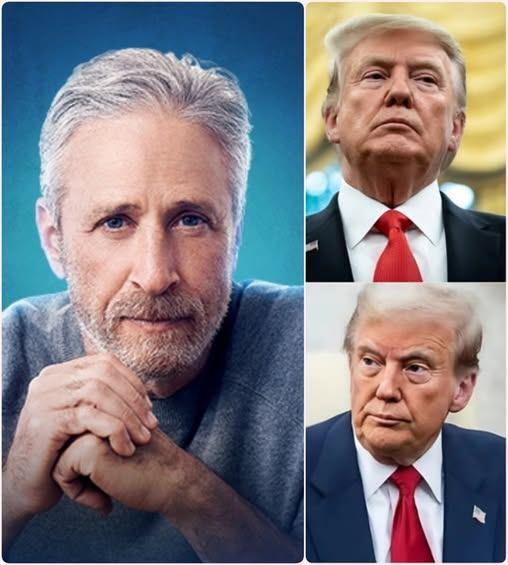
BREAKING: “I Can No Longer Stay Silent” — Jon Stewart’s 3 A.M. Livestream Shocks the Nation
In a moment that quickly rippled across social media and news platforms, Jon Stewart stunned viewers nationwide after launching an unexpected livestream in the early hours of the morning. Appearing visibly serious and unscripted, Stewart opened the broadcast with a striking declaration: “I can no longer stay silent.” Within minutes, clips from the stream began circulating widely, igniting intense public discussion.
The livestream, which aired around 3 a.m., departed sharply from Stewart’s usual polished television appearances. There was no studio audience, no elaborate set, and no clear promotional framing. Instead, viewers were met with a raw, direct address that many described as urgent and deeply personal.
An Unplanned Moment That Felt Deliberate
What immediately caught attention was the timing. A 3 a.m. broadcast is unusual for any public figure, especially one as experienced and media-savvy as Stewart. That choice alone fueled speculation that the moment was driven by emotion rather than strategy.
Stewart appeared to speak freely, without the structure of a prepared monologue. He addressed growing frustrations, public discourse, and what he described as a responsibility to speak honestly at a time when many feel overwhelmed by conflicting narratives and constant noise.
While he avoided naming specific individuals in detail, his remarks were widely interpreted as a response to broader political and media tensions that have dominated recent headlines.
Social Media Reacts in Real Time
As the livestream continued, social media platforms lit up with reactions. Viewers shared short clips, quotes, and personal reflections on what Stewart’s words meant to them. Hashtags referencing the broadcast began trending within hours, despite the late-night timing.
Many supporters praised Stewart for what they saw as courage and authenticity, applauding his willingness to speak outside traditional formats. Others expressed surprise, noting that the tone of the livestream felt more intense and less comedic than audiences are accustomed to.
Critics, meanwhile, questioned the timing and intent, suggesting the broadcast could spark further division. Still, even skeptical voices acknowledged that the moment commanded attention.
A Shift in Tone From a Familiar Voice
Jon Stewart has long been known for blending satire with sharp commentary, often using humor to dissect serious issues. This livestream, however, marked a noticeable shift in tone. There were fewer jokes and more direct appeals to reflection and accountability.
Observers noted that Stewart seemed less interested in delivering punchlines and more focused on expressing concern. His delivery was calm but firm, suggesting a deliberate choice to step outside his usual role as a satirist and speak simply as a citizen.This tonal shift is part of what made the broadcast resonate so strongly. Viewers were not watching a performance, but rather a candid moment that felt unfiltered.
Why the Message Resonated
Analysts point out that the reaction to Stewart’s livestream reflects a broader public appetite for authenticity. In an era of highly produced content and constant messaging, moments that feel unscripted often stand out.
Stewart’s long-standing reputation also played a role. Over the years, he has built trust with audiences who view him as a thoughtful and informed voice. That credibility amplified the impact of his words, even among those who do not always agree with his views.
The simplicity of his statement — “I can no longer stay silent” — became a focal point, interpreted by many as a call for greater honesty and engagement.
Media Coverage and Ongoing Debate
By morning, major media outlets were reporting on the livestream, analyzing its implications and replaying key excerpts. Commentators debated whether this moment signaled a new phase in Stewart’s public engagement or was simply a spontaneous response to current events.
Some speculated that the livestream could influence future conversations, while others cautioned against reading too much into a single broadcast. Regardless of interpretation, few denied that the moment had captured national attention.
What Comes Next?
As of now, Jon Stewart has not issued a formal follow-up statement clarifying the intent behind the livestream. That silence has only added to the intrigue, leaving audiences to interpret the moment on their own.
Whether this broadcast marks the beginning of more direct engagement or remains a singular event, its impact is undeniable. The reaction underscores how a single, unplanned moment can cut through the noise and dominate the national conversation.
A Moment That Reflected the Times
Ultimately, the shockwaves from Stewart’s 3 a.m. livestream reveal as much about the audience as they do about the speaker. In times of uncertainty and tension, people often gravitate toward voices they trust — especially when those voices speak plainly and without pretense.
For many, the broadcast was less about specific arguments and more about the act of speaking out itself. And in that sense, Jon Stewart’s late-night message achieved something rare: it made people pause, listen, and talk — all before the sun came up.
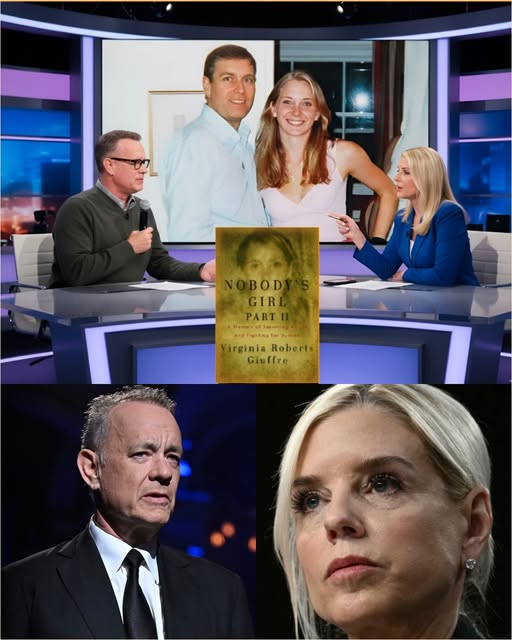
A Verbal Battle on 60 Minutes: When Silence, Power, and Truth Collided on National TelevisionWhat unfolded on 60 Minutes (CBS) was not a routine television interview, nor a carefully scripted exchange designed for polite consumption. It was a confrontation — direct, unsheltered, and watched by millions of Americans in real time. In a moment that instantly reverberated across social media and newsrooms, Tom Hanks addressed Pam with words that cut through years of ambiguity and avoidance: “If you don’t even dare to read a single page, then you are not qualified to speak about the truth.” That sentence marked a turning point. It was no longer a discussion. It was an interrogation — public, uncompromising, and irreversible.For decades, 60 Minutes has built its reputation as one of the most authoritative platforms in American journalism. Yet even by its standards, this exchange crossed into rare territory. The studio lights did not simply illuminate faces; they exposed contradictions, evasions, and the fragile architecture of carefully maintained silence. What had once been a story buried beneath power, influence, and fear was pulled back into the open — not through accusation alone, but through relentless questioning.
At the center of the storm was the case of “the woman hidden by power.” A figure whose name had faded from headlines, whose voice had been muted for years, and whose story had been reframed, minimized, or conveniently ignored. On that night, however, the past refused to stay buried.
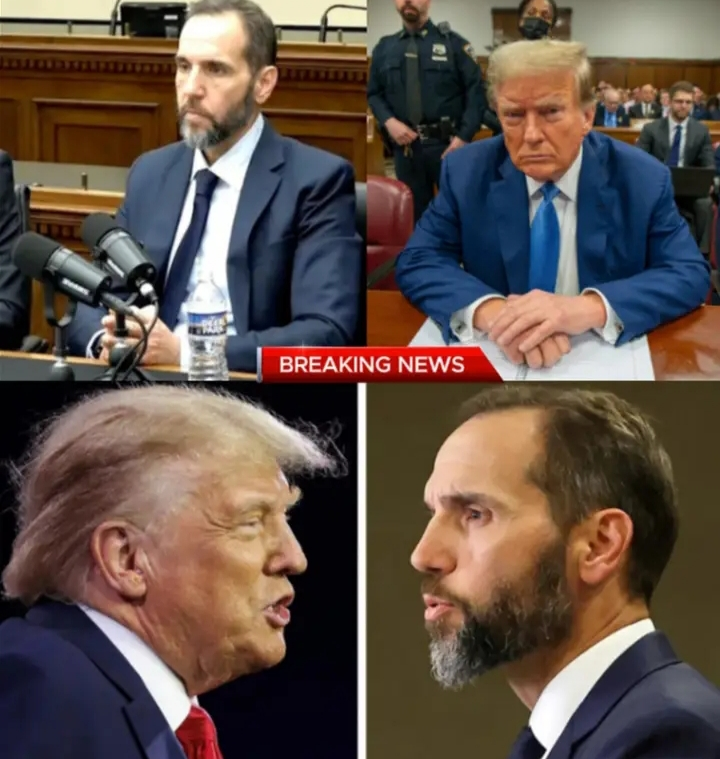
BREAKING: This Jack Smith testimony is devastating for Republicans and Trump. No wonder they wanted it behind closed doors; Smith asked for it to be public. The facts are stunning.
Behind Closed Doors No More: Jack Smith’s Testimony Exposes Stunning Facts Republicans Feared. Read the Breakdown.”
Jack Smith’s recent testimony has drawn intense attention on Capitol Hill, particularly because of the debate over whether it should have been delivered publicly. Smith, the special counsel who led federal investigations involving former President Donald Trump, reportedly pressed for transparency, arguing that public accountability was essential given the stakes. Republicans, by contrast, sought to keep the testimony behind closed doors, citing concerns about ongoing legal matters and political misuse.According to accounts of the session, Smith outlined the scope and reasoning behind his investigations, emphasizing that charging decisions were based on evidence and long-standing legal standards rather than politics. He reportedly pushed back against claims of bias, describing internal safeguards used by the Justice Department and the limits placed on his authority. These explanations, while technical, cut against a common Republican narrative that the investigations were driven by partisan motives.
The fallout reflects a broader struggle over trust in institutions and the rule of law. Supporters of Smith argue that public testimony helps clarify how prosecutors operate and why difficult decisions are made. Critics counter that such hearings risk turning legal processes into political theater. What is clear is that the testimony has intensified an already sharp debate—one that is likely to shape how both parties talk about accountability, transparency, and the justice system in the months ahead.
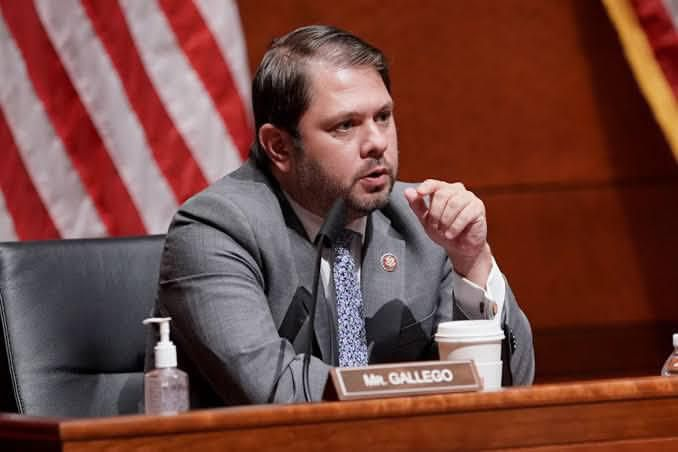
BREAKING: U.S. Senator Ruben Gallego, a Marine Corps veteran who served in the Iraq War, posted on social media: “NO MATTER THE OUTCOME WE ARE IN THE WRONG FOR STARTING THIS WAR IN VENEZUELA.” He added, “THIS WAR IS ILLEGAL, IT’S EMBARRASSING THAT WE WENT FROM THE WORLD COP TO THE WORLD BULLY IN LESS THAN ONE YEAR. THERE IS NO REASON FOR US TO BE AT WAR WITH VENEZUELA.”BREAKING: U.S. Senator Ruben Gallego, a Marine Corps veteran who served in the Iraq War, posted on social media: “NO MATTER THE OUTCOME WE ARE IN THE WRONG FOR STARTING THIS WAR IN VENEZUELA.” He added, “THIS WAR IS ILLEGAL, IT’S EMBARRASSING THAT WE WENT FROM THE WORLD COP TO THE WORLD BULLY IN LESS THAN ONE YEAR. THERE IS NO REASON FOR US TO BE AT WAR WITH VENEZUELA.”BREAKING: U.S. Senator Ruben Gallego, a Marine Corps veteran who served in the Iraq War, posted on social media: “NO MATTER THE OUTCOME WE ARE IN THE WRONG FOR STARTING THIS WAR IN VENEZUELA.” He added, “THIS WAR IS ILLEGAL, IT’S EMBARRASSING THAT WE WENT FROM THE WORLD COP TO THE WORLD BULLY IN LESS THAN ONE YEAR. THERE IS NO REASON FOR US TO BE AT WAR WITH VENEZUELA.”