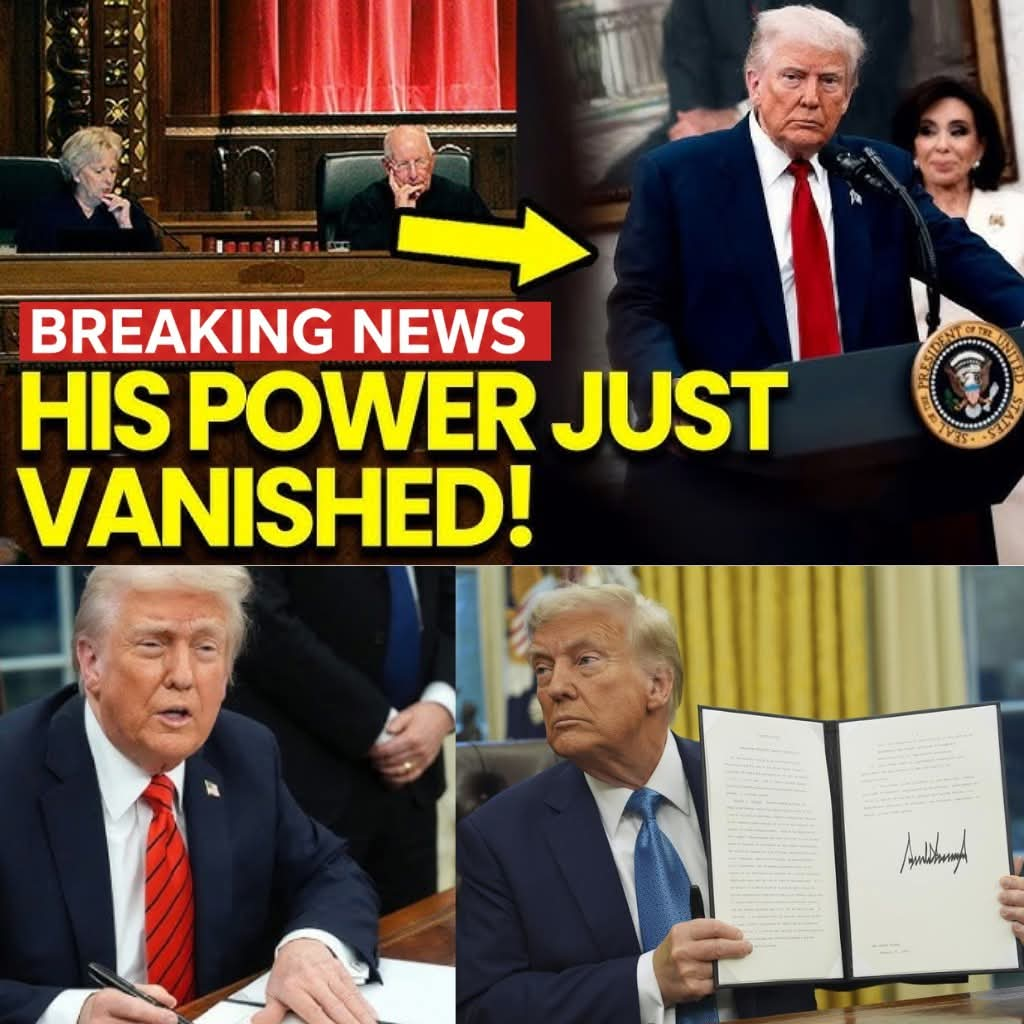
In a dramatic and closely watched decision, the U.S. Supreme Court has issued a ruling that legal analysts say could fundamentally alter the political and legal landscape surrounding former President Donald Trump. While the Court stopped short of naming Trump directly in its opinion, the implications of the ruling are already sending shockwaves through Washington, reigniting debates about presidential accountability, executive authority, and whether a former president can truly be beyond the reach of constitutional consequences.According to constitutional scholars, the ruling addresses a long-contested gray area in American law: the limits of presidential power after leaving office. For decades, this question has hovered over U.S. politics without a definitive answer. Now, many experts argue the Court has opened a door—one that could lead to renewed impeachment discussions, fresh legal challenges, or even unprecedented congressional action.At the heart of the decision is the principle that no individual, regardless of office, is immune from constitutional oversight. The Court clarified key interpretations of executive privilege, separation of powers, and Congress’s authority to investigate and act on alleged misconduct—even after a president’s term has ended.Legal insiders say this ruling strengthens Congress’s hand in pursuing accountability, potentially removing procedural roadblocks that have previously stalled investigations involving Trump. Some analysts believe it could allow lawmakers to revisit actions that were once considered politically sensitive or legally ambiguousThis is not just about Trump,” one constitutional law expert noted. “This ruling reshapes how future presidents will govern, knowing that their actions may follow them long after they leave the Oval Office.”Impeachment Talk ResurfacesAlmost immediately after the ruling was announced, whispers of a new impeachment push began circulating on Capitol Hill. While impeachment of a former president remains a contentious and largely untested process, supporters argue that the Constitution does not prohibit it—especially if the goal is to bar an individual from holding future office.

Leave a Reply