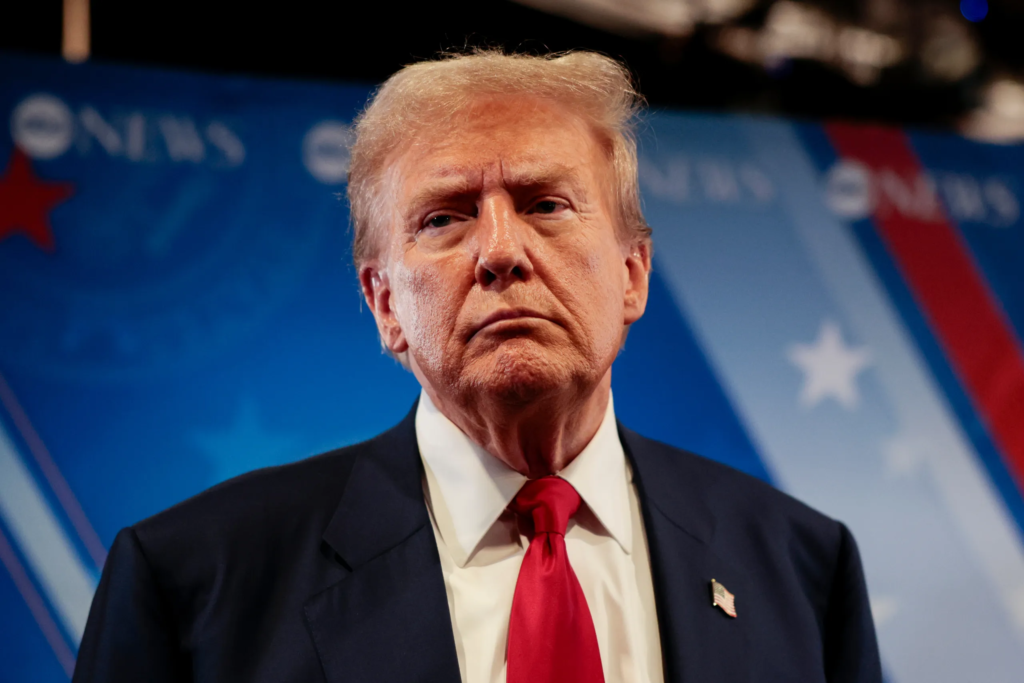
Washington — Talk of a dramatic rupture inside the Republican Party surged this week after lawmakers and strategists openly debated a scenario once considered unthinkable: a large bloc of Republicans siding with Democrats in a decisive vote against former President Donald Trump.
No such vote has occurred. No conviction has been handed down by Congress. But the fact that the possibility is being discussed — publicly and with specificity — reflects the depth of strain inside a party grappling with Mr. Trump’s legal exposure, electoral prospects and continued dominance over its base.
In interviews, hearings and closed-door conversations, some Republicans have begun to articulate red lines they say they would not cross, even for the party’s most powerful figure. The shift has fueled speculation about how many lawmakers might ultimately break ranks if faced with a stark choice between party loyalty and institutional normsFrom Hypothetical to Political Stress Test
The conversation intensified after a series of court filings and judicial rulings kept Mr. Trump’s legal cases in the headlines. While those cases will be decided by judges and juries — not by Congress — their political ramifications are unavoidable.
Several Republican senators, speaking on background, acknowledged that the party has never conducted a serious internal accounting of what would happen if legal outcomes forced a reckoning.
“For years, the strategy was to avoid the question,” said one senior Republican aide. “Now it’s unavoidable.”
Democrats have seized on the moment to argue that accountability should transcend party lines. Republicans counter that premature talk of conviction — legal or political — risks undermining due process.
The Numbers Game — and Why It Matters
In modern congressional history, bipartisan votes against a party’s leader are rare and destabilizing. Even a few defections can shift outcomes; dozens would represent a seismic break.
Political scientists caution, however, that public speculation often outpaces reality.
“Talking about 50 lawmakers is very different from watching 50 lawmakers cast a vote,” said Julian Zelizer, a historian at Princeton University. “Pressure, incentives and fear reshape behavior at the moment of decision.”
Past impeachment votes against Mr. Trump illustrate the point. While some Republicans did vote to convict, the numbers fell well short of a majority — even amid intense public scrutiny.At the heart of the tension is a split between electoral pragmatists and populist loyalists. The former worry that Mr. Trump’s legal troubles and polarizing style could jeopardize down-ballot races and control of Congress. The latter argue that abandoning him would fracture the base and invite primary challenges.
House Republicans, operating with a narrow majority, feel that pressure acutely. Senate Republicans, less exposed to immediate electoral backlash, have shown slightly more willingness to speak openly about limits.
Still, few are eager to move first.
“This is a classic collective-action problem,” said Sarah Binder, a congressional scholar. “Everyone waits to see who blinks.”Mr. Trump remains the most influential figure in Republican politics, commanding loyalty from voters and shaping primary outcomes. That power has historically deterred dissent.
Yet even some longtime allies privately acknowledge that the legal calendar, combined with campaign demands, has changed the calculus.
A spokesperson for Mr. Trump dismissed talk of Republican defections as “media fantasy,” reiterating that he has committed no crimes and will be vindicated.
What Would Actually Trigger a Break?
Legal experts emphasize that only concrete developments — a final conviction, damning evidence presented in open court, or a collapse in public support — would likely push large numbers of Republicans to act in unison.
Short of that, rhetoric may remain just that.
“Institutions move slowly,” said Norm Ornstein, a scholar at the American Enterprise Institute. “They resist dramatic turns until they can no longer avoid them.

Leave a Reply